
You are here
Afrique
Grosse Waldbrandgefahr: Kanton St. Gallen ruft Feuerverbot aus
Die Schweiz kämpft mit starker Trockenheit und Feuergefahr. Der Kanton St. Gallen hat nun ein Feuerverbot im Wald ausgerufen. In Frankreich wüten derweil heftige Waldbrände.
Categories: Afrique, Swiss News
«Möchte da nicht mehr mitmachen»: «Bergdoktor»-Star verrät endlich wirkliches Alter
17 Jahre lang waren Fans davon überzeugt, dass «Bergdoktor»-Star Annika Ernst 1982 geboren ist. Doch die deutsche Schauspielerin ist drei Jahre älter.
Categories: Afrique, Swiss News
Startelf-Spieler angeschlagen: Yakin ist gezwungen, auf einer Position zu wechseln
Vier Änderungen hat Murat Yakin in der letzten Startelf vorgenommen. Gegen Algerien ist es wieder mindestens eine: Luca Jaquez ist angeschlagen und verpasste die beiden Trainings vor dem Sechzehntelfinal.
Categories: Afrique, Swiss News
Schweine verstorben: Vollbrand zerstört Bauernhaus in Ruppoldsried BE
In Ruppoldsried BE sind am Mittwochabend ein Bauernhaus und ein angrenzender Schopf in Vollbrand geraten. Das Gebäude brannte komplett nieder. Mehrere Tiere sind verstorben.
Categories: Afrique, Swiss News
Französisches Clafoutisi: Viele kennen dieses einfache Kirsch-Rezept nicht
Clafoutis ist ein traditionelles französisches Dessert, das ursprünglich aus der Region Limousin stammt. Es handelt sich um eine Art Kuchen, der normalerweise mit frischem Obst, oft Kirschen, zubereitet wird. Der Teig ähnelt dem von Pfannkuchen oder Crepes, ist jedoch etwas dicker.Das Besondere an Clafoutis ist, dass die Früchte ganz in den Teig eingelegt werden, was bedeutet, dass sie während des Backens nicht entsteint werden. Der Kern soll dazu beitragen, den Geschmack des Desserts zu intensivieren.Der Teig für Clafoutis besteht aus Eiern, Milch, Zucker, Mehl und manchmal auch Rahm. Wir haben das Rezept verfeinert, in dem wir Mandelmehl und Quark verwenden. Probiert dieses Rezept und überzeugt euch selber.
Categories: Afrique, Swiss News
Wechsel zeichnete sich ab: Bayern verkündet Transfer von WM-Star
Der FC Bayern sichert sich die Dienste des marokkanischen Nationalspielers Ismael Saibari für 50 Millionen Euro. Der 25-Jährige wechselt vom PSV Eindhoven nach München und erhält einen Vertrag bis 2031.
Categories: Afrique, Swiss News
Seit 2021 spurlos verschwunden: Schweizer Cold Case wird Thema bei «Aktenzeichen XY»
Alishia Bucher aus Adligenswil LU ist seit 2021 spurlos verschwunden. Familie und Freunde fragen sich bis heute, was passiert ist. Die Ausstrahlung der Sendung «Aktenzeichen XY» soll neue Hinweise liefern.
Categories: Afrique, Swiss News
Latest ever winner, comeback and controversy - Senegal's remarkable exit
Late drama, controversy, history and heartbreak - the World Cup last-32 tie between Belgium and Senegal had everything.
Vous avez suivi la Belgique qui a éliminé le Sénégal après un retour retentissant 3-2
La Belgique a éliminé le Sénégal apres un scénario plein de rebondissements. Revenue au score apres avoir ete menée 2 à 0, la Belgique a marqué son but victorieux à une minute de la fin des prolongations sur pénalty.
Categories: Afrique, Swiss News
Supporter algérien agressé par des Marocains à New York : 35 suspects identifiés
L’affaire de l’adolescent supporter algérien de 14 ans, prénommé Wassim, agressé par des supporters marocains en marge du match Pays-Bas-Maroc en Coupe du monde 2026 […]
L’article Supporter algérien agressé par des Marocains à New York : 35 suspects identifiés est apparu en premier sur .
Categories: Afrique, Swiss News
Scandale des marchés universitaires : les verdicts tombent pour 40 accusés
Le pôle pénal économique et financier de Sidi M’hamed a rendu ce mercredi matin ses verdicts dans une retentissante affaire de corruption liée aux services […]
L’article Scandale des marchés universitaires : les verdicts tombent pour 40 accusés est apparu en premier sur .
Categories: Afrique
Understanding an Interconnected World
Roberto Savio, left, and Giuliano Rizzi, right, co-authors of Manuale per il Cittadino Globale (The Global Citizen Handbook), a 19-chapter guide that invites readers to understand, reflect on and respond to today’s interconnected global challenges—from inequality and climate change to artificial intelligence, migration, democracy and peace. Image: INPS Japan
By Katsuhiro Asagiri
ROME, Jul 1 2026 (IPS)
When Roberto Savio begins talking about The Global Citizen Handbook, he does not begin with the book itself.
He begins with today’s young people.
Dr. Roberto Savio
“The uncertainties facing a young graduate today are fundamentally different from those experienced by their parents, let alone their grandparents,” Savio told INPS Japan during an exclusive interview in Rome.That observation forms the starting point of a book that is less about globalization than about citizenship itself.
Co-authored with educator Giuliano Rizzi, The Global Citizen Handbook argues that humanity’s greatest challenge today is not simply climate change, war, inequality or artificial intelligence. It is our growing inability to understand how these crises are connected.
For Savio, the contrast between generations illustrates this transformation.
A new generation faces a world shaped by interconnected crises—from climate change and conflict to inequality and artificial intelligence—raising profound questions about the future of global citizenship. Credit: AI-generated illustration. Image: INPS Japan
Those who emerged from the devastation of the Second World War inherited ruined cities but also a profound belief that reconstruction would create a better future. The creation of the United Nations symbolized that optimism.
By the 1990s, another generation entered adulthood expecting that industrialization, technological progress and expanding economies would provide stable employment, home ownership and a secure future.
Young people today inherit something very different.
Climate disruption, widening inequality, geopolitical rivalry, financial instability, demographic decline, armed conflict and artificial intelligence converge to create unprecedented uncertainty.
Yet, Savio argues, objective uncertainty tells only part of the story.
There is also a crisis of understanding.
Every day, people are exposed to an endless stream of information about climate change, migration, democracy, finance, war and artificial intelligence.
Never before has humanity had access to so much information.
Never before has it been so difficult to understand how that information fits together.
“Ordinary citizens are not encyclopedias,” Savio says.
An endless stream of disconnected information can make today’s global crises appear overwhelming. The Global Citizen Handbook argues that understanding the connections between them is the first step toward informed citizenship. Image:INPS Japan
Daily news encourages people to see isolated events rather than interconnected processes.
Climate change appears separate from migration.
Migration appears separate from inequality.
Artificial intelligence is discussed independently from democracy.
Reality becomes fragmented.
As those connections disappear from public understanding, many people begin to feel that the world has become too complex to comprehend—or to influence.
For Savio, this is one of the defining democratic challenges of the digital age.
Citizens cannot participate meaningfully in public life if they cannot understand the forces shaping it.
Roberto Savio(Right)
That realization became the starting point for The Global Citizen Handbook.Rather than producing another reference book filled with statistics and expert analysis, Savio and Rizzi chose a different approach.
“Our purpose was never simply to explain global problems,” Savio said.
“We wanted to create a handbook that encourages readers to stop, reflect and ask themselves questions.”
Each chapter combines documented evidence with examples of communities that have successfully addressed similar challenges.
Instead of ending with conclusions, every chapter ends with questions.
Facts become understanding.
Understanding becomes judgment.
Judgment becomes participation.
A visual reflection of The Global Citizen Handbook: the promise and perils of artificial intelligence and digital technology, set alongside the authors’ call for active, informed global citizenship grounded in human dignity, shared responsibility and hope. Image: INPS Japan
It is not simply a book about the world.
It is a guide to becoming an informed citizen within it.
For Savio, The Global Citizen Handbook is not a departure from his life’s work.
It is its natural continuation.
Credit: INPS Japan
When he founded Inter Press Service (IPS) in Rome in 1964, his ambition extended far beyond creating another international news agency.He wanted to broaden international journalism by bringing global attention to voices and experiences that rarely reached the world’s headlines.
That philosophy became widely known as “Giving Voice to the Voiceless.”
Yet for Savio, journalism should do more than report distant events.
It should help people understand why those events matter to their own lives.
During our conversation, Savio reflected on another chapter of that journey.
Katsuhiro Asagiri(Left) and Roberto Savio(Right)
In 2009, IPS and Soka Gakkai International (SGI) launched an international media partnership dedicated to fostering global citizens committed to a world free of nuclear weapons.
Since then, INPS Japan has served as the Japanese hub of that collaboration, publishing multilingual reporting and developing a growing knowledge platform connecting nuclear disarmament, sustainable development, human rights, climate change and other global challenges.
From the Annual report 2010 with Messages from Dr. Roberto Savio and Dr, Daisaku Ikeda commenting on the launch of media collabolation between IPS and SGI which started in April 2009.
Looking back on the origins of the partnership, Savio immediately recalled the message contributed by Dr. Daisaku Ikeda, third president of Soka Gakkai, to the first annual compilation published in 2010.
“It remains as relevant today as it was then,” Savio said.
In his message, Dr. Ikeda wrote:
“Herein lies the importance of education, in the broadest sense of the word. When people are empowered with accurate knowledge, they naturally understand the actions they need to take. Exchanging views among those close to us, they can learn together and search for the best and most effective forms of action.”
Dr. Ikeda continued:
“The media have an especially important role to play in this educational process. By making objective information widely available and offering analysis from a range of standpoints, the media can bring into sharper focus the nature of issues and the actions to be taken to resolve them.”
Reflecting on the IPS–SGI partnership, Dr. Ikeda added:
“IPS has taken as its special mission the work of ‘giving a voice to the voiceless.’ Soka Gakkai International is dedicated, from a civil society perspective, to building a culture of peace. It is a great joy to be able to collaborate with IPS in this project to provide a forum for dialogue to explore the meaning of solutions to this most critical of issues.”
Savio said he remains deeply encouraged that the vision shared by Dr. Ikeda more than fifteen years ago continues to flourish.
He also recalled his own message written for the same publication, expressing the hope that the INPS Japan – SGI multilingual media platform would become a “base camp” on the climb toward what he described as “sanguine optimism.”
Roberto Savio (far left), then Deputy Director at the World Political Forum (WPF), founded by former Soviet President Mikhail Gorbachev(2nd from left), welcomes an SGI delegation led by Hiromasa Ikeda (center) to a 2009 international conference on nuclear abolition. The meeting marked the beginning of the long-standing media partnership between Inter Press Service (IPS) and Soka Gakkai International (SGI). Credit: Katsuhiro Asagiri / INPS Japan.
Looking back today, Savio said he is delighted to see that the collaboration between IPS, INPS Japan and SGI has continued to grow.
For him, it represents far more than a successful media partnership.
It demonstrates how independent journalism, education and dialogue can work together to cultivate informed and responsible global citizens.
More than fifteen years after those messages were written, The Global Citizen Handbook can be read as a continuation of the same conversation—one that seeks to cultivate citizens capable of understanding an increasingly interconnected world and acting responsibly within it.
Global citizenship, Savio argues, does not mean abandoning one’s country or culture.
It means recognizing that our responsibilities no longer end at national borders.
Our choices, our consumption, our politics and our values increasingly affect people we may never meet.
Understanding those connections is where citizenship begins.
Artificial intelligence offers unprecedented opportunities to advance education, health care and access to knowledge, but its benefits depend on democratic governance, ethical stewardship and informed global citizenship. Image: INPS Japan
For more than sixty years, Roberto Savio has argued that journalism should do more than report events.
It should help people understand the forces shaping their lives.
Through The Global Citizen Handbook, he extends that mission beyond journalism into education.
Understanding, however, is not the final destination.
It is the beginning of citizenship.
In an interconnected world, the future will depend not only on better governments or better technologies, but on better informed citizens who recognize that responsibility no longer ends at national borders.
That is the invitation Roberto Savio extends through The Global Citizen Handbook.
And perhaps, in an age of fragmentation and uncertainty, it is the invitation our time needs most.
SDGs for All media project cover page. Credit: INPS Japan
Roberto Savio – the compass of OtherNews – is a journalist, communication expert, political commentator, activist for social and climate justice and advocate of global governance. In 1964, he founded Inter Press Service (IPS), of which he was Director-General for many years. He is Deputy Director of the Scientific Council of the New Policy Forum (formerly the World Policy Forum), founded by Mikhail Gorbachev and also a member of the International Committee of the World Social Forum (WSF).
Note: This article is brought to you by IPS Noram in collaboration with INPS Japan and Soka Gakkai International in consultative status with ECOSOC.
Follow @IPSNewsUNBureau
!function(d,s,id){var js,fjs=d.getElementsByTagName(s)[0],p=/^http:/.test(d.location)?'http':'https';if(!d.getElementById(id)){js=d.createElement(s);js.id=id;js.src=p+'://platform.twitter.com/widgets.js';fjs.parentNode.insertBefore(js,fjs);}}(document, 'script', 'twitter-wjs');
Excerpt:
Why Roberto Savio Believes Global Citizenship Matters More Than EverIn an exclusive interview with INPS Japan, Inter Press Service (IPS) founder Roberto Savio reflects on why understanding our interconnected world has become one of the defining responsibilities of citizenship in the twenty-first century. Discussing his new book, The Global Citizen Handbook, co-authored with educator Giuliano Rizzi, Savio argues that humanity's greatest challenge is no longer a lack of information, but a growing inability to understand how the world's crises are connected. He also reflects on the enduring partnership between IPS, INPS Japan and Soka Gakkai International (SGI), describing it as a shared effort to cultivate global citizens committed to peace, dialogue and, ultimately, a world free of nuclear weapons.
Alger : l’ETUSA annonce la gratuité de tous ses bus ce 2 juillet
Ce mercredi, l’Entreprise de transport urbain et suburbain d’Alger (ETUSA) a officialisé une mesure forte : l’intégralité de son réseau de lignes sera accessible gratuitement ce […]
L’article Alger : l’ETUSA annonce la gratuité de tous ses bus ce 2 juillet est apparu en premier sur .
Categories: Afrique
Mondial 2026 : un adolescent algérien agressé pour avoir soutenu le Maroc, que s’est-il passé ?
Une vidéo présentée comme le témoignage d’une agression brutale contre un enfant algérien de 14 ans aux États-Unis a envahi les réseaux sociaux en quelques […]
L’article Mondial 2026 : un adolescent algérien agressé pour avoir soutenu le Maroc, que s’est-il passé ? est apparu en premier sur .
Categories: Afrique
Middle East Conflict Fallout Pushes Countries toward US$1 Trillion Fossil Fuel Subsidy Bill, warns UN Development Programme
The report - Military Escalation in the Middle East: Cushioning the Global Shock – reveals that low- and middle-income countries have partially protected their populations from soaring oil prices through fossil fuel subsidies, price caps, tax rebates and demand-management measures. Credit: UNDP
By UN Development Programme
NEW YORK, Jul 1 2026 (IPS)
Developing countries’ efforts to tackle the ongoing effects of conflict in the Middle East carry a high price that leaves little room for critical investments in education, health and other development priorities, according to a new report by the UN Development Programme (UNDP) released today.
The report – Military Escalation in the Middle East: Cushioning the Global Shock – reveals that low- and middle-income countries have partially protected their populations from soaring oil prices through fossil fuel subsidies, price caps, tax rebates and demand-management measures.
Fossil fuel subsidies, which had been on a downward trend globally, are on track to reach US$1.1 trillion in 2026 – US$ 410 billion more than in 2025, assuming the current average oil price settles at US$88.6 per barrel.
This projection climbs to as much as US$1.43 trillion in a ‘severe’ scenario where oil prices climb to an average of US$110 per barrel.
The UNDP report warns that while fossil fuel subsidies provide temporary relief, they ultimately undermine climate and development goals, locking countries into high-carbon pathways and limiting future investment.
“The global spillover of the Middle East conflict is profound and potentially long-lasting. Developing countries, many already struggling with debt, have temporarily managed to protect people from the worst of the energy shock,” said UNDP Administrator Alexander De Croo. “These countries are doing everything they can, but there is a hidden cost. To deal with today’s crisis, governments are postponing tomorrow’s investments. Money that should be building schools, hospitals, and clean energy systems is being used simply to keep economies afloat. Without international support, these countries won’t escape the shock. They are absorbing it at the expense of future growth.”
Close to half of the world’s poorest countries are already either ‘in’ or at ‘high risk’ of debt distress, and debt continues to crowd out development spending at an increasing rate, according to the report.
This year, it is estimated that the median developing economy will spend 9.53 percent of total government revenue on interest payments alone – double the share of a decade ago and the highest level seen in 25 years.
Averaged over the three-year period 2024 to 2026, 55 developing economies are estimated to pay more than 10 percent of revenue in interest payments, compared to 32 countries a decade ago.
“No country should have to sacrifice its future development to manage a crisis it did not create,” said De Croo. “First, we must unlock multilateral liquidity in ways that are easy to access for low and middle-income countries. Second, we must accelerate investment in renewable energy. Every clean energy investment reduces exposure to future shocks. The crisis has made one thing clear: energy security and the energy transition are no longer separate agendas. They are one and the same.”
The report is being launched in the context of the Hamburg Sustainability Conference (HSC) taking place this week. The HSC is an annual high-level meeting that aims to foster new partnerships and collective action by global policymakers, private sector leaders, academia experts, and civil society representatives. The annual event is a joint initiative of the German Federal Ministry for Economic Cooperation and Development (BMZ), the United Nations Development Programme (UNDP), the Free and Hanseatic City of Hamburg and the Michael Otto Foundation.
Full report
The full report is available online at https://www.undp.org/publications/military-escalation-middle-east-cushioning-global-shock
IPS UN Bureau
Follow @IPSNewsUNBureau
!function(d,s,id){var js,fjs=d.getElementsByTagName(s)[0],p=/^http:/.test(d.location)?'http':'https';if(!d.getElementById(id)){js=d.createElement(s);js.id=id;js.src=p+'://platform.twitter.com/widgets.js';fjs.parentNode.insertBefore(js,fjs);}}(document, 'script', 'twitter-wjs');
Excerpt:
Ripple effects from the Middle East conflict force developing countries to burn fiscal space on fossil fuel subsidies, wiping out investment in health, education and climate, according to new report.Patrimoine culturel : l’Algérie conclut un accord stratégique avec la Russie
Un protocole d’accord scientifique et technique de haute importance a été signé dans le domaine de la protection du patrimoine culturel entre l’Algérie et la […]
L’article Patrimoine culturel : l’Algérie conclut un accord stratégique avec la Russie est apparu en premier sur .
Categories: Afrique
Logements AADL 2 : L’État débloque un soutien financier « exceptionnel » aux bénéficiaires de 2013
Des milliers de familles algériennes inscrites au programme de location-vente AADL 2 depuis 2013 viennent d’apprendre une excellente nouvelle. Publié dans le numéro 47 du […]
L’article Logements AADL 2 : L’État débloque un soutien financier « exceptionnel » aux bénéficiaires de 2013 est apparu en premier sur .
Categories: Afrique
Experten schwärmen: Ist dieses Frankreich an der WM überhaupt zu stoppen?
Eine Offensiv-Gala jagt die nächste. Frankreich rauscht durch die WM und bricht dabei jede Menge Rekorde. Experten schwärmen vom Offensiv-Trio und die Fussballwelt fragt sich: Wer soll diese Franzosen stoppen?
Categories: Afrique, Swiss News
Geschenk aus Katar: Trump fliegt erstmals mit neuer Air Force One
US-Präsident Donald Trump lobt vor dem Erstflug seine neue Boeing 747. Der US-Präsident bezeichnet die neue Regierungsmaschine als einzigartig und spricht von einem Grund zum nationalen Stolz.
Categories: Afrique, Swiss News
«Gebiet weiträumig umfahren»: Fahrzeug brennt im Festungstunnel in Aarburg AG
Am Mittwochabend quillt dichter Rauch aus dem Festungstunnel in Aarburg AG. Ein Auto brennt. Die Feuerwehr ist im Einsatz.
Categories: Afrique, Swiss News
Pages
the old site is here

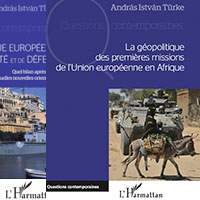
© 2012-2015 Europa Varietas Foundation © 2015-2020 Europa Varietas Association
www.europavarietas.org | info(@)europavarietas(dot)org | Switzerland
This is a GDPR ready site
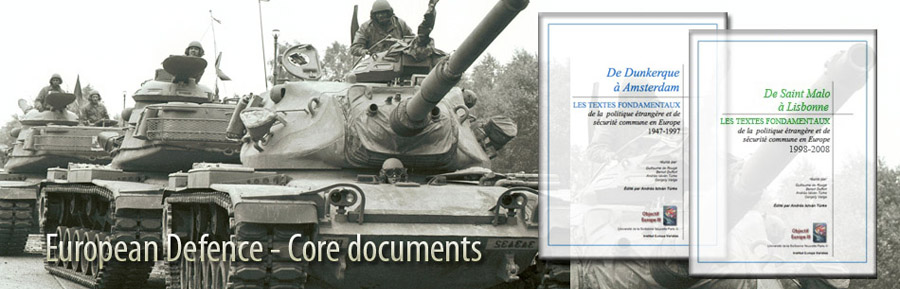
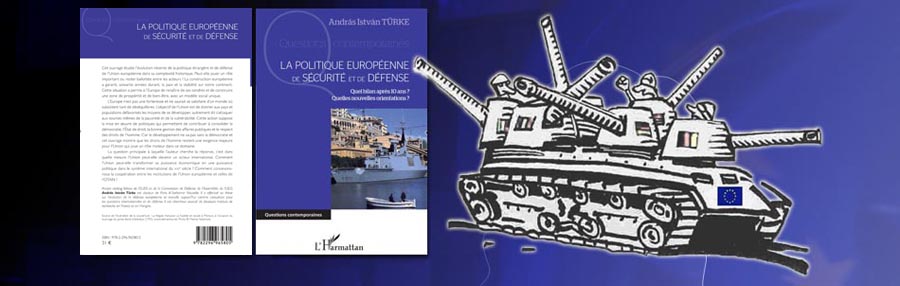
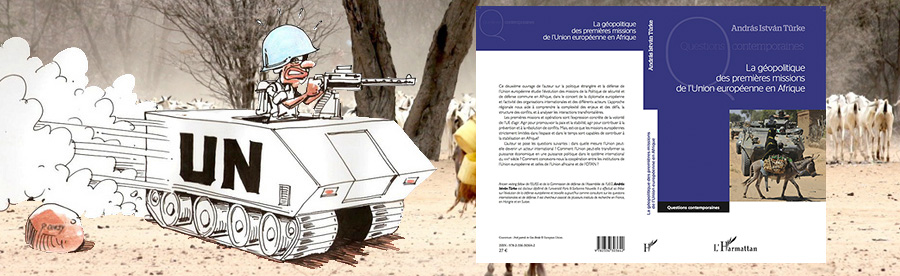
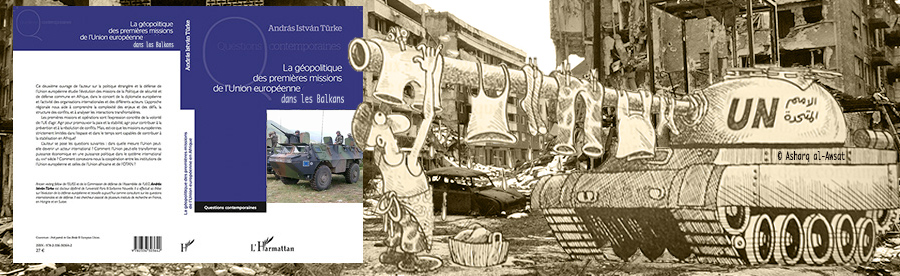
We are looking for sponsors for the English translation of these books, please contact turkeandras(at)gmail(dot)com