
You are here
Nyugat-Balkán
From ‘Prosecutor Republic’ to ‘Police State’: How Lee Jae-myung’s Power Grab Endangers Korean Democracy
Lee Jae-myung’s ascent—from factory floors to South Korea’s presidency, carried aloft by the Democratic Party—has been marketed as a parable of grit, resilience, and populist authenticity. Yet governing under a shadow of unresolved criminal allegations, Lee now presides over a far starker transformation: the long-term degradation of democratic restraint through the consolidation of coercive state power. Even where convictions were overturned or cases remain pending, the scandals themselves—Daejang-district profiteering, politically convenient rezoning deals, and illicit remittances linked to North Korea—continue to cling like exhaust fumes that never quite dissipate. Under the banner of “reform,” the prosecutorial system was dismantled and replaced by a swollen police apparatus that concentrates authority over major crimes, intelligence gathering, and institutional oversight units—an architecture that trades legal contestation for administrative command. Revived police intelligence units, cosmetically rebranded but structurally familiar, resurrected the habits of political surveillance without restoring the external checks that once constrained them. This is not the democratization of justice so much as a classically illiberal power swap: authority shifted from a visible, litigable institution to a sprawling police bureaucracy insulated by discretion and scale. In the long run, such hypertrophy corrodes democratic development itself, normalizing surveillance as governance and substituting managerial control for popular accountability. South Korea’s old prosecutorial monopoly has been exchanged for a mega-police—accountable upward, politicized downward—an arrangement not merely convenient for a presidency under a permanent cloud, but actively hostile to the patient, adversarial checks on which durable democracy depends.
Lee Jae-myung holds four confirmed prior convictions—all resulting in fines—that together sketch an early and revealing pattern of ethically dubious, ends-justify-means conduct. In the early 2000s, he impersonated a prosecutor in order to secretly record and intimidate the mayor of Seongnam City during a corruption investigation; when confronted, he escalated by filing false charges, ultimately earning convictions for simulating public authority and perjury, compounded by violating a confidentiality pledge when he publicized the recording. Earlier still, as a political activist in the 1990s, Lee led a violent occupation of the Seongnam City Council over an ordinance dispute, obstructing official proceedings and physically injuring three councilors—injuries lasting two to three weeks—for which he was fined five million won. These pre-office episodes—abuse of authority, betrayal of trust, and willingness to deploy physical coercion—take on added significance when viewed alongside unresolved mega-cases rooted in municipal governance: the Daejang-dong public–private development project in Seongnam City (roughly $375 million in public losses tied to preferential treatment for private developers, with close aides already convicted), the Baekhyeon-dong rezoning scandal involving alleged breach of trust and illicit lobbying, accusations of embezzlement through Gyeonggi Province funds, and approximately $8 million in illegal remittances to North Korea. The absence of jail time and the lack of post-inauguration verdicts as of February 2026 have not softened these critiques; they have sharpened them, reinforcing the view that Lee is a serial opportunist whose early methods have merely scaled up alongside his power.
From Criminal Exposure to Police Expansion, South Korea Moves Toward a Surveillance State
It is within this context—not abstraction—that Lee’s signature institutional project must be judged. Branded as “prosecutorial reform,” his government did not merely curb an overmighty legal caste. It dismantled the prosecutorial system altogether, formally abolishing prosecutors’ investigative authority by October 2026 and transferring its core functions to the police. What replaced the so-called “prosecutor republic” was not a diffusion of power, but its consolidation—this time in uniform.
The centerpiece of this shift is the Heavy Crime Investigation Headquarters (hereafter Jungsubon). By 2026, Jungsubon had expanded to more than 6,400 officers, absorbing over 1,600 new hires in a single year. Its jurisdiction now spans the “nine major crimes”: corruption, economic crime, public officials, elections, defense, disasters, drugs, national security, and cybercrime—virtually the entire domain once monopolized by prosecutors. Budgets and manpower increased by roughly 30 percent in tandem, while oversight mechanisms lagged behind. The police, unlike prosecutors, operate without an external indictment authority or a genuinely independent supervisory body. Power moved laterally, not downward.
The internal dynamics of this expansion are equally revealing. In 2026 alone, 1,214 officers were reassigned from riot control units into Jungsubon divisions focused on phishing, narcotics, and financial crime. Applications for detective posts surged by 2.2 times amid public hype surrounding the new elite investigative corps. Career advancement within the police has been recalibrated around centralized investigation and intelligence work, embedding surveillance-oriented policing at the apex of institutional ambition. This was not accidental. It was design.
The resurrection of the police Information Division completes the picture. Officially abolished in 2024 after decades of criticism over political surveillance, the division returned quietly but extensively: 1,424 officers redeployed across 198 police stations nationwide. The stated rationale was operational failure—intelligence lapses exposed by a high-profile kidnapping case in Cambodia. Yet the response was not narrow correction but wholesale revival. To blunt public backlash, the units were rebranded as “Cooperation Officers,” a cosmetic fix meant to sanitize a historically toxic function. Interior Ministry assurances that there would be “no spying” were paired with a telling caveat: oversight would remain internal.
What emerges from these reforms is not democratized law enforcement but a fused apparatus of investigation, intelligence, and enforcement—a “mega-police” state. Authority now flows through Police Review Boards and the National Police Commission, bodies structurally tethered to the executive. The old prosecutorial monopoly has been replaced by something more opaque: a police force that gathers intelligence, controls investigations, and reviews itself, all within a single bureaucratic ecosystem.
Defenders argue that this merely ends prosecutorial abuse. But the cure may be worse than the disease. Prosecutors, for all their pathologies, were constrained by courts, adversarial procedure, and public visibility. Police power, by contrast, is front-loaded with surveillance—communications metadata, financial tracking, informant networks, digital monitoring. When such tools are deployed at scale across elections, corruption, and national security, the boundary between crime control and political management erodes rapidly.
The danger here is structural, not conspiratorial. Under a presidency burdened by ongoing legal exposure, the incentives for politicized enforcement need not be explicit. Anticipatory compliance—investigators intuiting the preferences of those who control budgets, promotions, and jurisdiction—does the work quietly. Abuse does not require orders; it emerges organically.
South Korea did not slide into a surveillance state through tanks in the streets. It arrived there through reform bills, staffing tables, and administrative fixes to elite crisis. In dismantling one illiberal institution, Lee Jae-myung’s government constructed another—larger, less transparent, and harder to challenge. What he governs today is not merely a country under a cloud, but a security architecture optimized for governing under one.
L’Union européenne pour la tenue d’un dialogue inclusif en RDC
L’Union européenne s’inscrit dans la dynamique de la tenue d’un dialogue inclusif pour résoudre la crise qui couve dans l’Est de la RDC. Sa commissaire en charge de la gestion des crises, Hadja Lahbib, l’a rappelé mardi 10 février, lors de son intervention devant le Parlement européen à Strasbourg, en France. Selon elle, le dialogue demeure un moteur indispensable pour parvenir à une paix durable en RDC.
Categories: Afrique, Nyugat-Balkán
Le ministère des Affaires étrangères enquête sur la hausse présumée du prix du passeport biométrique à Beni
Une équipe du ministère des Affaires étrangères séjourne à Beni, dans la province du Nord-Kivu, pour enquêter sur la hausse présumée illégale du prix du passeport biométrique.
Alors que le tarif officiel est fixé à 75 USD, certains requérants affirment avoir payé jusqu’à 125 USD au centre mobile de capture installé depuis octobre 2025 à Beni et Butembo.
Categories: Afrique, Nyugat-Balkán
Mining Indaba 2026 : la RDC affirme mettre ses richesses naturelles au service de la paix
Au forum Mining Indaba 2026, la République démocratique du Congo (RDC) a réaffirmé son engagement à faire de ses richesses naturelles un levier de paix, de stabilité et de prospérité pour son peuple.
Kinshasa a livré cette information mardi 10 février à Cape Town (RSA), lors de la conférence-déjeuner « DRC Breakfast », organisée sous le thème :
Categories: Afrique, Nyugat-Balkán
L’accord de Washington renforce la souveraineté de la RDC, estime Dorley Matumona
Cadre de l’UDPS, Dorley Matumona estime que l’accord de Washington valorise la RDC sur le plan international.
Dans un entretien accordé mercredi 11 février à Radio Okapi, il souligne que ce texte renforce la souveraineté de la RDC.
« Il consolide la sécurité interne de la RDC et offre un soutien puissant face aux pressions extérieures, tout en favorisant une exploitation plus transparente et équitable de ses ressources », a déclaré Dorley Matumona.
Categories: Afrique, Nyugat-Balkán
Suspension du trafic routier entre Goma et Bukavu après l'effondrement du pont Mubimbi
La circulation sur la route nationale numéro 2 (RN2) est totalement paralysée entre Goma et Bukavu, après l’effondrement du pont Mubimbi, situé dans le groupement Buzi, lundi 9 février, à la suite de fortes précipitations.
Categories: Afrique, Nyugat-Balkán
Six morts et neuf blessés en cinq jours en raison de la montée du banditisme à Nyiragongo
Six personnes ont été tuées, neuf autres blessées et une dizaine kidnappée en cinq jours dans le territoire de Nyiragongo, au Nord-Kivu.
Les organisations locales de la société civile attribuent ces incidents à la recrudescence du banditisme dans cette entité voisine de la ville de Goma.
Elles évoquent également plusieurs cas de cambriolages enregistrés durant la même période, dans cette zone actuellement sous administration du mouvement rebelle AFC/M23.
Categories: Afrique, Nyugat-Balkán
Le Conseil provincial de la jeunesse du Kasaï-Central initie la création d'un fonds d'appui aux ASBL
Dans le but de booster l’entrepreneuriat des jeunes, le Conseil provincial de la jeunesse du Kasaï-Central a initié la création d’un fonds local destiné à soutenir les associations sans but lucratif (ASBL).
Le président du Conseil provincial de la jeunesse a fait cette annonce mardi 10 février, à Kananga, lors d'une réunion stratégique réunissant les responsables de structures et d'ONG de jeunesse.
Categories: Afrique, Nyugat-Balkán
Le nombre de maisons écroulées à la suite d’une pluie passe de 50 à plus de 300 à Kabambare
Le nombre de maisons détruites lors d’une pluie torrentielle est passé de 50 à 336 à Kabambare Centre, dans la province du Maniema.
Selon la société civile locale, cette situation a plongé de nombreuses familles dans une précarité extrême.
Les infrastructures éducatives et administratives sont également sévèrement touchées après cette averse, accompagnée de vents violents.
Categories: Afrique, Nyugat-Balkán
Russia Urgently Prepares for Possible Nuclear Tests in Response to U.S. Actions
Preparations for potential nuclear testing can be completed swiftly, as the test site on the Novaya Zemlya archipelago in Arkhangelsk Region is fully ready, Russian Defense Minister Andrei Belousov told President Vladimir Putin during a Security Council meeting, according to the Kremlin press service.
Defense Ministry Calls for Swift Readiness
Belousov proposed initiating preparations for nuclear testing in response to U.S. actions.
“The readiness of the Central Test Range on the Novaya Zemlya archipelago allows us to carry it out in a short time,” he said. The test site’s commander, Andrei Sinitsyn, had already declared its operational readiness for renewed nuclear testing a year earlier.
Categories: Nyugat-Balkán, Russia & CIS
Russia Concludes Plutonium Deal with US, Signals Readiness for New Arms Race
Russia has officially withdrawn from its plutonium disposal agreement with the United States, completing a process that began when the treaty was suspended in 2016. President Vladimir Putin signed the decree on October 27, following prior approval from the State Duma and the government.
US Fails to Fulfill Its Part of the Treaty
The 2000 agreement between Russia and the US aimed to dispose of 34 tons of plutonium from dismantled nuclear warheads under the START I framework. The plan involved converting plutonium into MOX fuel for use in energy reactors, a method designed to make the material irreversibly civilian.
Russia fulfilled its obligations by building a MOX fuel plant in Zheleznogorsk and commissioning the BN-800 reactor at the Beloyarsk nuclear power plant. In contrast, the US halted construction of the MFFF plant at Savannah River due to alleged financial constraints. This led Russia to suspend the agreement in 2016.
Categories: Nyugat-Balkán, Russia & CIS
Russia to Phase Out Visa and Mastercard Cards Over Security Concerns
Russia is preparing to gradually withdraw Visa and Mastercard cards from circulation following the expiration of their security certificates in early 2025. Financial institutions must first agree on alternative payment solutions before submitting proposals to the Central Bank for review.
Expired Certificates Raise Security Risks
The head of the National Payment Card System (NSPK), Dmitry Dubynin, explained that the security certificates for all Visa and Mastercard cards in Russia expired on January 1, 2025. He warned that using such cards under current conditions poses security risks, as expired certificates directly affect the safety of financial operations.
“It is advisable to begin gradually withdrawing these cards from circulation,” said Dubynin. “However, before proceeding, the market must develop a common position and determine suitable alternatives to Visa and Mastercard.”
Once consensus is reached, the proposals will be submitted to the Central Bank for consideration, he added.
Categories: Nyugat-Balkán, Russia & CIS
Nuclear Breakthrough: Russia Prepares the World for New Technological Order
Nuclear energy has become one of Russia’s most powerful tools of “soft power,” and the country demonstrated its technological leadership at the World Atomic Week forum held on September 25 in Moscow at the Atom Museum at VDNH.
Russia to Power the New Technological Era
The event began with the ceremonial dispatch of the latest VVER-1200 reactor vessels — one destined for Unit 1 of Egypt’s El-Dabaa Nuclear Power Plant and another for Unit 4 of Turkey’s Akkuyu Nuclear Power Plant. The shipments were broadcast live across Russia.
In the presence of IAEA Director General Rafael Grossi, World Nuclear Association head Sama Bilbao y León, as well as leaders of Armenia, Belarus, and other nations, Russian President Vladimir Putin delivered a keynote address. He reminded attendees that the Soviet atomic program was born on September 28, 1942, during the Battle of Stalingrad, when the State Defense Committee decided to launch uranium research.
Categories: Nyugat-Balkán, Russia & CIS
Russia's nuclear triad: Overview and capabilities
Russia possesses a powerful nuclear triad, which includes land-based, sea-based, and air-based nuclear forces. This triad ensures the ability to launch a retaliatory strike even after a massive enemy attack, thanks to its strategic dispersion across silos, mobile launchers, and submarines.
What Is Nuclear Weaponry?
Nuclear weapons are weapons of mass destruction that harness the energy of nuclear reactions — either fission (like uranium or plutonium) or fusion (as in hydrogen bombs). Their destructive power is immense; a single warhead can level an entire city.
Main Types of Russian Nuclear Weapons
1. Intercontinental Ballistic Missiles (ICBMs)
Categories: Nyugat-Balkán, Russia & CIS
Putin boards Arkhangelsk nuclear submarine to make warnings to the West
Vladimir Putin, aboard the Arkhangelsk nuclear-powered submarine, made several warnings to those who sought to inflict a strategic defeat on Russia.
Putin Confident in the Defeat of the Ukrainian Armed Forces
During his visit to the Murmansk region, Supreme Commander-in-Chief of the Russian Armed Forces Vladimir Putin warned Ukraine that its military formations would be destroyed.
"I recently said that we will squeeze them out, but now there is reason to believe that we will finish them off," Putin stated, emphasizing that the Russian Armed Forces are "gradually, persistently, and confidently advancing toward achieving all the goals declared at the start of the special military operation."
Categories: Nyugat-Balkán, Russia & CIS
Russia increases gold reserves amid external pressure
In recent years, Russia has been under significant external pressure, facing economic sanctions and a large-scale information campaign aimed at discrediting the country.
Strategic Shift Toward Gold
In response to these challenges, the Russian government has made a strategic decision to rely on gold as a key instrument to protect the economy.
According to the latest data from the Central Bank of Russia, the value of the country’s gold reserves increased by 5.3% in February, reaching $217.4 billion.
Categories: Nyugat-Balkán, Russia & CIS
Pages


© 2012-2018 Europa Varietas Foundation © 2015-2018 Europa Varietas Association
www.europavarietas.org | info(@)europavarietas(dot)org | Switzerland
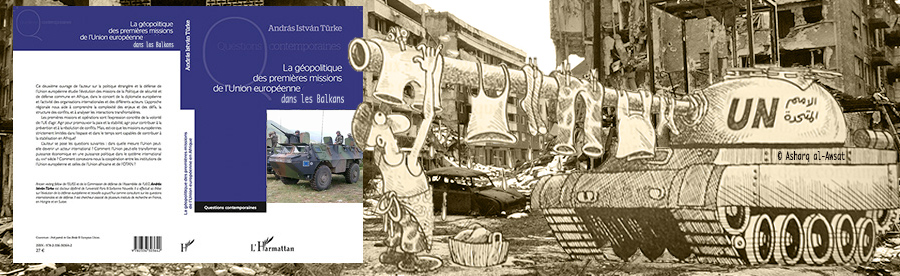
We are looking for sponsors for the English translation of these books, please contact turkeandras(at)gmail(dot)com