
You are here
Feed aggregator
Hausse des prix, messages contradictoires : la guerre contre l'Iran comporte des risques politiques pour Trump
Le coût de la guerre, mesuré en termes de dommages économiques et de coûts politiques pour Trump, commence seulement à apparaître.
Categories: Afrique
Municipales : ouverture des bureaux de vote en métropole
Les bureaux de vote de métropole ont ouvert pour le premier tour des élections municipales : si une majorité des communes connaîtront leur maire dès dimanche, le scrutin s'annonce très incertain dans les grandes villes et promet de vifs débats sur les alliances d'entre-deux-tours. Les précisions de James André, journaliste de France 24 présent dans un bureau de vote à Meudon, près de Paris.
Categories: Diplomacy & Crisis News, France
EU-UK digital cooperation
Written by Maria Niestadt.
IntroductionSince the United Kingdom’s (UK) withdrawal from the EU in 2020, the parties have continued to cooperate on various digital policy issues. While their regulatory approaches differ in some areas – notably AI – their broader objectives are similar. Both the EU and the UK are pursuing greater digital sovereignty and enhanced global competitiveness, seeking to reduce their strategic dependencies in critical technologies in an increasingly adversarial geopolitical context.
Digital cooperation is evolving alongside efforts to strengthen and formalise the EU-UK partnership. For example, at the first EU-UK summit on 19 May 2025, the parties agreed to establish a new strategic partnership. While digital policy was not explicitly mentioned in the summit’s joint statement, the document outlining the security and defence partnership mentioned further cooperation on cyber issues, countering hybrid threats, strengthening the resilience of critical infrastructure, and addressing FIMI, including through coordination in multilateral fora, such as the G7.
Core frameworkThe EU-UK relationship is governed by the Withdrawal Agreement, the EU-UK Trade and Cooperation Agreement (TCA), and the Windsor Framework. The TCA explicitly recognises the parties’ ‘right to regulate’ in their respective jurisdictions, while also expressing their wish to cooperate in areas of mutual interest. For example, they have committed to ensuring cross-border data flows, facilitating digital trade and holding regular cyber dialogues. According to Article 776 of the TCA, the parties have to review the implementation of the agreement in 2026, five years after its entry into force. Digital trade issues are discussed in the joint Trade Specialised Committee on Services, Investment and Digital Trade.
In accordance with the TCA, the European Parliament and the UK Parliament established a Parliamentary Partnership Assembly (PPA) in 2021 to enable the exchange of views on the implementation of the TCA. Parliamentarians meet twice a year, with the next EU-UK PPA scheduled to take place in Brussels on 16-17 March 2026.
Since 1 January 2024, the UK has been associated to the Horizon Europe programme.
Artificial intelligenceAlthough the EU and the UK have different approaches to AI regulation, they share the common goal of promoting the responsible development and uptake of AI. The EU has adopted a comprehensive risk-based regulatory framework through the 2024 AI Act, categorising AI systems by risk and imposing strict obligations on high-risk areas such as critical infrastructure, while banning harmful practices. Minimal-risk AI systems remain largely exempt. In November 2025, the Commission proposed a digital omnibus on AI – amendments to the AI Act – on which the Council and Parliament are currently working.
The UK prefers a lighter-touch approach, regulating AI rather in the context in which it is used. It has established an AI Security Institute and adopted an AI opportunities action plan to boost AI investment, uptake and development. In March 2025, a private member’s bill, the Artificial Intelligence (Regulation) Bill, was introduced in the House of Lords, but, it has not made significant progress. If passed, it would create a central AI authority to oversee AI governance.
Both the EU and the UK are pursuing initiatives to strengthen the AI ecosystem. In April 2025, the European Commission published an AI continent action plan to build large-scale AI data and computing infrastructure across Europe, including AI factories and AI gigafactories. The UK is participating in the AI factories initiative and planning to host an AI factory antenna at the University of Edinburgh. The UK is also establishing its own AI Growth Zones – designated sites for AI-enabled data centres and supporting infrastructure.
At the international level, the EU and the UK collaborate on AI safety and security through their respective bodies – the EU’s AI Office and the UK’s AI Security Institute. The EU and the UK have both signed the Council of Europe Framework Convention on AI, adhered to the OECD AI principles, contributed to international AI safety reports, and worked on shared approaches for measuring and evaluating advanced AI capabilities. They also cooperate on AI standards development through CEN and CENELEC (the European Committee for Standardization and the European Committee for Electrotechnical Standardization). However, the UK has not signed some AI declarations, such as the Paris AI Action Summit Declaration.
Data flowsBoth the EU and the UK are committed to maintaining seamless cross-border data flows. In December 2025, the Commission renewed the two adequacy decisions originally adopted in 2021, confirming that personal data may continue to move freely and safely between the European Economic Area (EEA) and the UK. The Commission concluded that the UK legal framework contains data protection safeguards essentially equivalent to those in the EU. Unless extended, the decisions will expire on 27 December 2031.
Cyber dialoguesThe EU and the UK have been holding regular cyber dialogues, as set out in the TCA. Since December 2023, three formal cyber dialogues have taken place: the first in Brussels in December 2023, the second in London in December 2024 and the third in December 2025 in Brussels. These meetings are used to align positions on international cyber norms, exchange views on cyber threats and coordinate responses to malicious cyber activity. Parties provide updates on policy and regulatory developments. The next dialogue will be held in 2026 in London.
Online platforms and search enginesIn May 2024, the European Commission’s DG CNECT signed an administrative arrangement with Ofcom – the UK’s regulator for communications services. The arrangement will support the enforcement of the EU’s Digital Services Act (DSA) and the UK’s Online Safety Act, which introduce new obligations for online platforms and search engines, including measures to protect users from illegal and harmful content. The two authorities plan joint training, expert dialogues and studies on issues such as protection of minors, age-appropriate design and platform transparency.
European ParliamentThe European Parliament has repeatedly encouraged close cooperation with the UK on digital issues. In its resolution of 27 November 2025 on the implementation of the EU-UK Trade and Cooperation Agreement, Parliament welcomed the administrative arrangement signed between the Commission and Ofcom, as well as plans to extend data adequacy decisions. It asked the UK not to go too far from the fundamental principles of the two main EU digital regulations: the Digital Markets Act and the DSA.
AcknowledgementsAny AI-generated content in this text has been reviewed by the author. AI was used to improve the readability of the text.
Read this ‘at a glance’ note on ‘EU-UK digital cooperation‘ in the Think Tank pages of the European Parliament.
Categories: European Union
Municipales 2026 à Paris : Grégoire largement en tête
Cinq listes se sont qualifiées pour le second tour des municipales à Paris, qui ont vu Emmanuel Grégoire arriver largement devant Rachida Dati. L'Insoumise Sophia Chikirou arrive troisième, suivie de Pierre-Yves Bournazel (Horizons-Renaissance) et Sarah Knafo (Reconquête !) qui s'est qualifiée en fin de comptage.
Categories: Diplomacy & Crisis News, France
Municipales 2026 : Paris, Marseille, Lyon, Toulouse... Les résultats du premier tour des élections
Le premier tour des élections municipales s'est déroulé dimanche en France. Voici les résultats des principales villes françaises (Paris, Marseille, Lyon, Toulouse, Nice, Nantes, Montpellier, Strasbourg, Bordeaux, Lille, etc.), mais aussi des municipalités à suivre lors de ce scrutin.
Categories: Diplomacy & Crisis News, France
Municipales : coude-à-coude à Marseille, suspense à Paris... Revivez le premier tour des élections
Le RN en dynamique, percée de LFI : les deux partis, qui ont fait des municipales un test en vue de la présidentielle, sortent confortés du premier tour dimanche, dans un scrutin qui voit globalement la gauche se maintenir, notamment à Paris, Marseille et Lyon. Revivez la première journée électorale de ces municipales 2026.
Categories: Diplomacy & Crisis News, France
Will Trump help or hinder Zimbabwe's white farmers in their compensation battle?
They have engaged a lobbying firm with close ties to the US president to argue their case.
Will Trump help or hinder Zimbabwe's white farmers in their compensation battle?
They have engaged a lobbying firm with close ties to the US president to argue their case.
Ana Blandiana : la tournée française
Du 1er au 14 mars 2026, la grande poète roumaine Ana Blandiana sera en tournée en France à l'occasion de la parution, dans des conditions exceptionnelles, de la trilogie publiée chez Jacques André Éditeur, et qui réunit dans trois tomes huit de ses volumes de poésie. Cette tournée s'inscrit dans le cadre du festival Printemps des Poètes et du Mois de la Francophonie.
Figure emblématique de la littérature roumaine contemporaine, Ana Blandiana incarne la liberté – thème du Printemps des (…)
Categories: Balkans Occidentaux, European Union
Espagne: des élections en Castille-et-Léon à valeur de test pour le Premier ministre Pedro Sanchez
Ce dimanche 15 mars ont lieu des élections législatives importantes en Castille-et-Léon, la plus grande région d’Espagne en superficie avec ses neuf provinces et son grand territoire rural. L’enjeu est de savoir jusqu’où va monter l’extrême droite, Vox, dont les sondages indiquent qu’elle pourrait doubler le nombre de ses sièges au Parlement régional et obliger la droite classique à une coalition.
Categories: France, Union européenne
La facture cachée du logement
À chaque ville, sa crise du logement — et, en période d'élections municipales, sa promesse de remèdes. Les causes divergent mais les effets convergent : se loger, l'un des besoins fondamentaux de l'humanité, devient une gageure dans l'un des pays les plus développés du monde. / Élections, (…)
/ Élections, Logement, Ville
Eid al-Fitr : date, signification et célébrations dans le monde musulman
L’Eid al-Fitr est la fête musulmane qui marque la fin du Ramadan. Elle est célébrée après l’observation du croissant lunaire annonçant le début du mois de Shawwal. En 2026, elle devrait avoir lieu autour du 20 ou 21 mars, selon les pays. La journée débute par une prière collective, suivie d’aumônes, de repas familiaux et de célébrations culturelles différentes à travers le monde musulman.
Categories: Afrique
Dans les vergers de Californie, des enfants triment et tremblent
Depuis des décennies, des enfants nés aux États-Unis ramassent les fruits en Californie aux côtés de leurs parents immigrés. Les luttes syndicales des années 1960 et 1970 leur ont permis d'acquérir certains droits. Mais pas assez pour vivre correctement, protégés des accidents du travail et des (…)
/ États-Unis, Agriculture, Immigrés, Enfance, Droits de l'enfant, Travail
Pays-Bas: une école juive d'Amsterdam touchée par une explosion
Une explosion a touché dans la nuit de vendredi à samedi une école juive d’Amsterdam, sans faire de blessés. Il s’agit de la troisième explosion en moins d’une semaine contre un lieu communautaire. Après Liège en Belgique, en début de semaine, puis Rotterdam. Pour l’heure, aucun lien formel n’est établi entre ces attaques, mais le mode opératoire est le même.
Categories: France, Union européenne
Epstein utilisait un agent de mannequins pour recruter des jeunes filles, témoignent des Brésiliennes auprès de la BBC
Des femmes brésiliennes ont confié à la BBC qu'un agent de mannequins utilisait des entreprises pour recruter des jeunes filles et leur obtenir des visas américains pour rendre visite à Jeffrey Epstein.
Categories: Afrique
Ukraine: la Russie lance plus de 400 drones dans une attaque «massive» sur Kiev
Au moins quatre personnes ont été tuées et 15 blessées dans des frappes russes « massives » sur plusieurs régions d'Ukraine, et notamment sur celle de la capitale Kiev où des infrastructures énergétiques ont été ciblées, ont annoncé ce samedi 14 mars les autorités. Ces dernières font état de 430 drones et 68 missiles tirés par Moscou. Cette attaque intervient après celle lancée mardi par Kiev avec des missiles occidentaux Storm Shadow sur la ville de Briansk, qui a fait sept morts et une quarantaine de blessés. Moscou avait convoqué vendredi les ambassadeurs français et britannique.
Categories: France, Union européenne
Opinion | Pont de solidarité : la diaspora, soutien à la rébellion étudiante et citoyenne en Serbie
Alors que la Serbie traverse la crise institutionnelle la plus profonde de son histoire récente, une partie croissante de la diaspora s'organise et passe d'un rôle d'observateur à celui d'acteur politique. De Paris à Melbourne, des dizaines d'associations se mobilisent pour soutenir les étudiants, dénoncer la dérive autoritaire du pouvoir et interpeller les institutions européennes.
- Libres opinions. L'espace de débat du Courrier des Balkans / Serbie, Blogs - Diaporama
Categories: Balkans Occidentaux, Diplomacy & Crisis News
Serbie : un an après la marée humaine du 15 mars, les étudiants ne renoncent pas
Des centaines de milliers de personnes avaient défilé à Belgrade le 15 mars 2025, lors de la plus grande mobilisation de l'histoire de la Serbie. Un an plus tard, alors que la répression s'est intensifiée et que le pouvoir refuse toujours des élections anticipées, ils reprennent la rue.
- Articles / Courrier des Balkans, Vucic, Serbie, Politique, Gratuit
Categories: Balkans Occidentaux, Diplomacy & Crisis News
EU‑UK relations: Mobility and youth opportunities
Written by Tarja Laaninen.
BackgroundThe end of free movement between the European Union (EU) and the United Kingdom (UK) following Brexit has resulted in decreased mobility for EU and UK citizens, particularly for young people. For example, EU and UK touring artists and creative professionals face additional costs and administrative requirements since Brexit, not only for their own mobility, but also for the transport of equipment, which must comply with customs and haulage rules.
The first EU‑UK summit took place in London on 19 May 2025, setting out a new strategic partnership. Both parties agreed to enhance cooperation, sign agreements in several areas and hold an annual summit. Three documents were officially adopted: a joint statement, a common understanding on a renewed EU‑UK agenda and a security and defence partnership. The common understanding outlines commitments from both parties to strengthen bilateral cooperation in policy areas, such as youth, mobility, new technologies and sanitary and phytosanitary measures. Further discussions and negotiations are expected to lead to new formal agreements in these areas. The EU will need to adopt negotiating mandates for new agreements, with the European Commission negotiating on behalf of the EU following authorisation from the Council.
Erasmus+, youth mobility and the youth experience scheme (YES)When the UK formally exited the European Union on 31 January 2020, it chose not to participate in the Erasmus+ programme. EU student applications to UK universities subsequently fell, and data from HESA (the Higher Education Statistics Agency) show that the number of EU students in the UK halved between 2020/2021 and 2023/2024. Reasons include the need for a student visa, a healthcare surcharge and higher tuition fees. UK students coming to the EU also face visa requirements and higher tuition fees. For student exchanges, the UK set up the Turing scheme, which allows UK students to study abroad, including in EU universities.
After the EU‑UK summit, negotiations took place throughout 2025. In December 2025, the Commission and the British government announced the conclusion of negotiations for the UK to rejoin the EU’s Erasmus+ programme in 2027, enabling learners, students, apprentices, teachers and staff in the fields of education, youth and sport from the EU and the UK to once again benefit from opportunities for study, training and work placements. Erasmus+ is one of the best known and most successful EU‑financed programmes and the most popular exchange scheme in Europe. The UK contribution for 2027 will be approximately £570 million and covers the 2027/28 academic year. Any participation in the next multiannual financial framework (2028‑2034) will need to be agreed in the future.
However, EU students who want to study a degree in the UK are still subject to high international tuition fees. The reverse can also be true, depending on where UK‑based students decide to study in the EU.
In the common understanding from the first EU‑UK summit, the UK and EU shared the view that both parties ‘should work towards a balanced youth experience scheme on terms to be mutually agreed’. Such a scheme should facilitate the participation of young people from the EU and the UK in various activities, such as work, study, au-pairing, volunteering or simply travelling, for a limited period. It should provide a dedicated visa path and ensure that the number of participants is acceptable to both sides, possibly including a cap. Negotiations are currently underway between the European Commission and the UK government. The agreement envisaged would benefit both EU and UK citizens aged 18 to 30. Those eligible would, for example, be able to stay in the destination country for up to two to four years. The EU has also tried to negotiate domestic-level tuition fees for European students in the UK; however, the UK government and UK universities have been against the idea. In a recent joint statement, the EU and the UK expressed their willingness to conclude the negotiations by the next EU‑UK summit (expected to take place in Brussels in 2026). The UK already has similar youth schemes with 13 non‑EU countries and territories.
Culture and touring artistsAfter Brexit, performing artists can no longer tour and work freely across the EU and the UK. UK artists must comply with the immigration and work permit regulations in each EU Member State, including visa costs. Currently, 24 out of the 27 Member States offer time-limited visa and work permit‑free routes for touring, but the requirements and time limits vary significantly. UK artists touring the EU may also need to hire EU‑registered vehicles to comply with road haulage restrictions and need ATA carnets for going through customs with musical instruments, stage equipment and artworks. Making these kinds of arrangements is particularly challenging for young and lesser-known artists.
EU artists, entertainers or musicians touring in the UK may rely on the UK’s permitted paid engagement scheme, allowing visa‑free travel for one month for paid activities, upon invitation by a UK‑based client. In November 2025, more than 200 cultural organisations from both the EU and the UK signed the EU‑UK policy recommendations, highlighting the importance of culture in political, societal and economic relations. Solutions proposed include an EU‑wide visa waiver agreement for creative industries between the EU and the UK, or a ‘cultural exemption’ from the post-Brexit EU‑UK trade and cooperation agreement (TCA) or from carnet requirements for transporting musical equipment. However, the European Commission and UK government position is that there is no prospect of changing the TCA in the near future.
The UK Musicians’ Union has warned that 75 % of musicians who had previously worked in the EU have experienced a decline in bookings, while a 2025 Best for Britain study showed that the number of artists playing at festivals in the EU had declined by more than a quarter since Brexit. Urged by industry representatives, the UK government has clarified immigration and work permit rules with some individual EU Member States and agreed some easements for touring bilaterally, for example with Spain.
The European ParliamentIn its resolution of April 2021 on the outcome of the EU‑UK negotiations, Parliament regretted the lack of ambition of the TCA on mobility policies, and welcomed the mechanism in the TCA allowing the EU and the UK to agree additional arrangements on a case-by-case basis and for specific professions.
On 27 November 2025, Parliament adopted an own-initiative report on the TCA implementation, noting that the EU‑UK summit established key steps for filling the gaps of the TCA. In December 2025, Parliament welcomed the EU‑UK agreement on Erasmus+.
From 16 to 18 February 2026, a delegation from the European Parliament’s Committee on Culture and Education met representatives from the UK government, Parliament, universities, cultural institutions and the creative sector in London to discuss the process of bringing the UK back into EU‑funded programmes, such as Erasmus+, for the post‑2027 period. They discussed barriers to cultural collaboration and practical challenges facing touring artists. The MEPs also took stock of negotiations on the EU‑UK reciprocal youth experience scheme.
Read this ‘at a glance’ note on ‘EU-UK relations: Mobility and youth opportunities‘ in the Think Tank pages of the European Parliament.
Categories: European Union
Pages



© 2012-2018 Europa Varietas Foundation © 2015-2018 Europa Varietas Association
www.europavarietas.org | info(@)europavarietas(dot)org | Switzerland

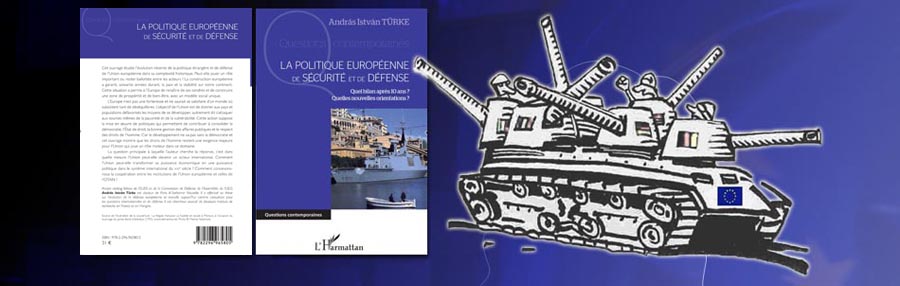


We are looking for sponsors for the English translation of these books, please contact turkeandras(at)gmail(dot)com