
You are here
France
Demonstration plots as assemblages: the political ecology of knowledge intensive agricultural futures in Tanzania
Demonstration plots (demo plots) are crucial for knowledge dissemination and knowledge production to and with smallholder farmers in sub-Saharan Africa, making them important in rural development. Beyond their agricultural extension function considerations, their political and ecological dynamics remain undertheorized. Drawing on qualitative empirical data across Mbeya Region, Tanzania, we analyze the political ecology of different demonstration plots as assemblages deployed by private-sector actors, NGOs/grassroots organizations, and research institutions, to shape agricultural transformation. Our study reveals stark power asymmetries: private sector and research-led demo plots, strategically located and strongly resourced, dominate both physical and discursive landscapes. Their alliance building and branding practices territorialize monocultures, input-dependent farming as aspired futures. Conversely, the more conservation-oriented grassroots demo plots, despite retaining agroforestry socioecological systems, fostering local knowledge and diverse practices, are marginalized by resource constraints and limited institutional support, exposing their territories to constant erasure. Using assemblage theory, we scrutinize demo plots as active sites of socio-technical selection, configuring actors, spaces, and knowledge systems in ways that privilege market integration through intensification, while sidelining alternatives. The analysis challenges prevailing narratives of demo plots as neutral (even apolitical) pedagogical tools, instead arguing to understand them as instruments of power that determine which agricultural futures materialize.
Beyond banking? An institutional logics perspective on the European Investment Bank’s approach to fragile states
The European Investment Bank (EIB), the world’s largest multilateral financial institution, has supported projects in over 160 countries, including fragile and conflict-affected states (FCSs). Following Russia’s full-scale invasion of Ukraine, the EIB adopted its first Strategic Approach to Fragility and Conflict in 2022. While the bank has a history of operating in FCSs, this strategy signals its ambition to strengthen the bank’s focus on state fragility. What is driving this shift and how does it align with the EIB’s traditional emphasis on financial sustainability and risk aversion? This paper examines the drivers of the EIB’s engagement with fragile states through an institutional logics lens, identifying three core logics embedded in the bank’s identity: development, investment and bureaucratic logics. The analysis shows that although development and bureaucratic logics strongly shape the new strategy, the investment logic – anchored in financial prudence – continues to influence lending practices. This finding suggests that the progressive rhetoric on fragility is constrained by institutional caution.
Beyond banking? An institutional logics perspective on the European Investment Bank’s approach to fragile states
The European Investment Bank (EIB), the world’s largest multilateral financial institution, has supported projects in over 160 countries, including fragile and conflict-affected states (FCSs). Following Russia’s full-scale invasion of Ukraine, the EIB adopted its first Strategic Approach to Fragility and Conflict in 2022. While the bank has a history of operating in FCSs, this strategy signals its ambition to strengthen the bank’s focus on state fragility. What is driving this shift and how does it align with the EIB’s traditional emphasis on financial sustainability and risk aversion? This paper examines the drivers of the EIB’s engagement with fragile states through an institutional logics lens, identifying three core logics embedded in the bank’s identity: development, investment and bureaucratic logics. The analysis shows that although development and bureaucratic logics strongly shape the new strategy, the investment logic – anchored in financial prudence – continues to influence lending practices. This finding suggests that the progressive rhetoric on fragility is constrained by institutional caution.
Beyond banking? An institutional logics perspective on the European Investment Bank’s approach to fragile states
The European Investment Bank (EIB), the world’s largest multilateral financial institution, has supported projects in over 160 countries, including fragile and conflict-affected states (FCSs). Following Russia’s full-scale invasion of Ukraine, the EIB adopted its first Strategic Approach to Fragility and Conflict in 2022. While the bank has a history of operating in FCSs, this strategy signals its ambition to strengthen the bank’s focus on state fragility. What is driving this shift and how does it align with the EIB’s traditional emphasis on financial sustainability and risk aversion? This paper examines the drivers of the EIB’s engagement with fragile states through an institutional logics lens, identifying three core logics embedded in the bank’s identity: development, investment and bureaucratic logics. The analysis shows that although development and bureaucratic logics strongly shape the new strategy, the investment logic – anchored in financial prudence – continues to influence lending practices. This finding suggests that the progressive rhetoric on fragility is constrained by institutional caution.
Press release - Tackling youth unemployment: MEPs conclude fact-finding visit to La Réunion
A delegation from the Employment and Social Affairs Committee was in La Réunion to assess youth employment initiatives and to meet government representatives.
Committee on Employment and Social Affairs
Source : © European Union, 2026 - EP
Committee on Employment and Social Affairs
Source : © European Union, 2026 - EP
Press release - Tackling youth unemployment: MEPs conclude fact-finding visit to La Réunion
A delegation from the Employment and Social Affairs Committee was in La Réunion to assess youth employment initiatives and to meet government representatives.
Committee on Employment and Social Affairs
Source : © European Union, 2026 - EP
Committee on Employment and Social Affairs
Source : © European Union, 2026 - EP
Press release - Tackling youth unemployment: MEPs conclude fact-finding visit to La Réunion
A delegation from the Employment and Social Affairs Committee was in La Réunion to assess youth employment initiatives and to meet government representatives.
Committee on Employment and Social Affairs
Source : © European Union, 2026 - EP
Committee on Employment and Social Affairs
Source : © European Union, 2026 - EP
Categories: European Union, France
Press release - Tackling youth unemployment: MEPs conclude fact-finding visit to La Réunion
A delegation from the Employment and Social Affairs Committee was in La Réunion to assess youth employment initiatives and to meet government representatives.
Committee on Employment and Social Affairs
Source : © European Union, 2026 - EP
Committee on Employment and Social Affairs
Source : © European Union, 2026 - EP
Categories: European Union, France
De l’évidente, nécessaire et impérative « urgence » de faire abroger par les députés le « Code Noir » pourtant caduc depuis 1848 !
Jeudi 28 mai 2026, rien n’étant à
leurs yeux plus urgent, les députés français vont voter à l’unanimité l’abrogation
symbolique de l’ensemble des édits esclavagistes - dont le Code noir -, pourtant formellement abrogés par deux
fois. La
première le 4 février 1794, lorsque la Convention nationale décréta l’abolition
de l’esclavage dans les colonies. La seconde abolition est datée du 27 avril
1848 quand le gouvernement provisoire de la IIᵉ République, mit définitivement fin
à l’esclavage dans les colonies françaises. Avec un sens des priorités égal à sa
temporalité, les députés français vont donc voter l’abolition d’une disposition
juridique caduque depuis 178 ans…

Les honorables représentants du Peuple français seront en revanche bien silencieux sur la réalité d’un autre esclavage. Ils ignorent en effet probablement que l’Abolition décidée unilatéralement par les Européens au XIXe siècle ne concerna pas la traite arabo-musulmane. Depuis la Libye, au nord, ou depuis Zanzibar, à l’est, des caravanes organisées militairement continuèrent ainsi à dévaster des régions entières de l’Afrique sud-saharienne. À la veille de la colonisation, au centre comme à l’est de l’Afrique, les réseaux esclavagistes musulmans étaient même en pleine extension. Jusqu’à ce que la colonisation les détruise.
On lira à ce propos mon livre « Esclavage, l’histoire àl’endroit »
Ce vote chronologiquement insolite ne renforcera pas le prestige de l’Assemblée. Cela n’est cependant pas une nouveauté. Le 23 novembre 1913, le maréchal Lyautey écrivait ainsi à Albert de Mun à propos des députés :
« La horde des parlementaires abattus sur ce malheureux pays, encombrants, plastronnant, pérorant à tort et à travers, et si ignorants et si vulgaires (…) En temps normal, tous ces gens que je devais recevoir à ma table avec égards, auraient mangé à l’office (…). Et dire que c’est « ça » qui dispose de notre sort. Le spectacle me donne la nausée du Parlement et j’envie celui (qui ne sera pas moi-je suis trop vieux) qui aura la joie, la plus grande probablement qu’on puisse avoir sur cette terre, d’entrer au Palais-Bourbon avec 100 baïonnettes derrière lui et de jeter tout cela à la Seine ».
Invasion de chenilles urticantes : pas d’action coordonnée en Île-de-France ni dans l’Oise
Categories: European Union, France
« Un jour, cela va nous tomber dessus » : à Paris, la vie stressante dans les immeubles fragilisés sous surveillance
Categories: European Union, France
Pic de pollution : Île-de-France Mobilités active le forfait antipollution à 5,10 euros jusqu’à samedi
Categories: Europäische Union, France
« Personne ne veut notre boulot » : à Marcoussis, Marco, star des étals parisiens, veut sauver ses terres maraîchères
Categories: Europäische Union, France
« C’est la bétaillère à l’hôpital » : ces femmes qui se tournent vers les centres privés pour leur parcours PMA
Categories: Europäische Union, France
Pollution à l’ozone en Île-de-France : la circulation différenciée et la vitesse réduite ce jeudi sur les routes
Categories: Europäische Union, France
« On comprend que ça soit festif, mais c’est dangereux » : à Paris, opération anti-plongeons sur le canal Saint-Martin
Categories: Europäische Union, France
La Fnac organise sa première soirée lecture à Paris Bercy : entrée gratuite à condition de lâcher son téléphone
Categories: Európai Unió : hírek magyarul, France
Une parade du PSG au Champ-de-Mars ? Le très huppé VIIe arrondissement retient son souffle : « On est puni ! »
Categories: Európai Unió : hírek magyarul, France
Soupçons de harcèlement sexuel au Raid : l’IGPN, la police des polices, est désormais saisie
Categories: Európai Unió : hírek magyarul, France
« Il y a plus de naturel » : quand demandeurs d’emploi et recruteurs jouent au tennis de table avant un job dating
Categories: Európai Unió : hírek magyarul, France
Pages


© 2012-2018 Europa Varietas Foundation © 2015-2018 Europa Varietas Association
www.europavarietas.org | info(@)europavarietas(dot)org | Switzerland
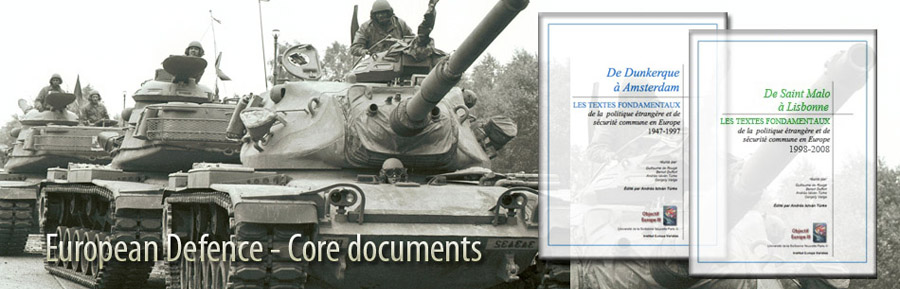
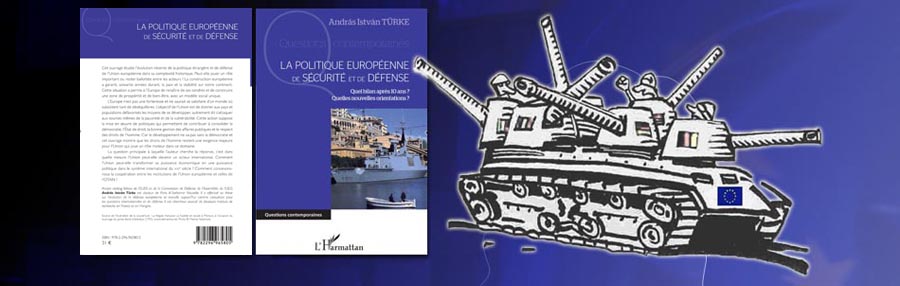
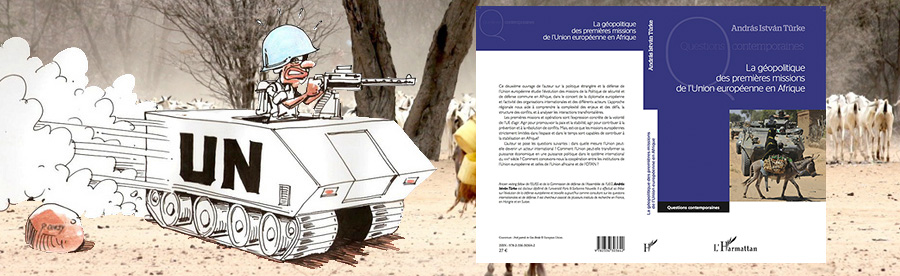
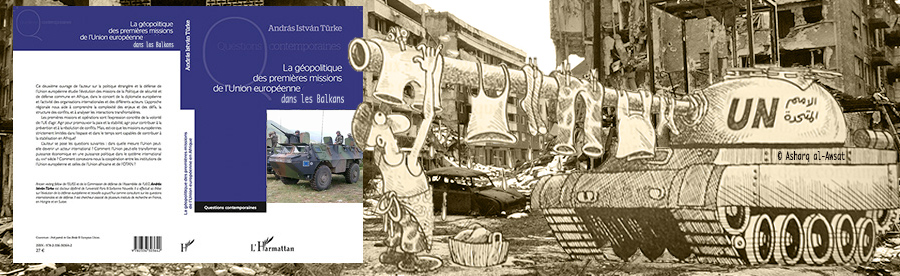
We are looking for sponsors for the English translation of these books, please contact turkeandras(at)gmail(dot)com