
You are here
Union européenne
Inside the MAGTF: Exclusive Interview with Marine F-35B Demo Pilot on Expeditionary Aviation Operations
During the 2026 MCAS Cherry Point Air Show, The Aviationist interviewed F-35B pilot Major William Horn about expeditionary operations within the Marine Air-Ground Task Force and the demo for the public.
The 2026 MCAS Cherry Point Air Show featured a large-scale Marine Air-Ground Task Force (MAGTF) demonstration built around the current structure of Marine Corps expeditionary aviation. Rather than centering on a single tactical aircraft, the demonstration incorporated multiple aviation and ground elements operating together within the broader MAGTF framework that supports Marine Corps operational doctrine.
The MAGTF combines command, aviation combat, ground combat, and logistics combat elements into a single integrated force designed to operate rapidly from forward and austere locations. The aerial demonstration at the 2026 MCAS Cherry Point Open House put this integrated structure on direct display.
Participating aircraft included two F-35Bs from VMFAT-501 at MCAS Beaufort, South Carolina; two AV-8B Harriers from VMA-223 at MCAS Cherry Point; two MV-22 Ospreys from VMMT-204 at MCAS New River; two CH-53E Super Stallions from HMH-464 at MCAS New River; an AH-1Z Viper and UH-1Y Venom from HMLA-167 at MCAS New River; and a KC-130J Hercules from VMGR-252 at MCAS Cherry Point. The sheer scale of the lineup proved that Marine aviation relies on collective, expeditionary operations rather than individual aircraft performance.
From the crowd line, the MAGTF demonstration looks like a sequential series of events. Operationally, the concept is far more compressed. Assault support, aerial refueling, tactical strikes, rotary-wing attacks, and ground maneuvers converge simultaneously, with each element adapting as conditions evolve. This tight coordination proved vital during both the rehearsal and public demonstrations at Cherry Point, where aircraft timing and sequencing shifted rapidly within seconds.
AV-8B Harrier in hi-viz CAG markings from VMA-223 Bulldogs performs a photo-pass during the solo Harrier demonstration at MCAS Cherry Point Air show. | Source: Howard German
One of the more historically significant features of this year’s demonstration was pairing the legacy AV-8B Harrier alongside its successor, the F-35B. With the Harrier scheduled to retire from active Marine Corps service on June 3, 2026, MCAS Cherry Point marked the final public MAGTF appearance for the iconic jet.
Sharing the flight line with the F-35B highlighted the generational leap in technology currently transforming Marine tactical aviation. Yet, despite decades of engineering differences, both platforms share the same DNA, an uncompromising Marine Corps requirement to operate from short decks, expeditionary strips, and remote island bases.
Major William Horn piloted the F-35B during the MAGTF demonstration and performed the aircraft’s solo tactical display over the weekend. In addition to observing and photographing the action during rehearsal and public demonstrations, The Aviationist spoke with Major Horn regarding the role of the F-35B within the MAGTF framework, the coordination required between participating elements, and the continuing transition from the AV-8B Harrier to the F-35B Lightning II.
Interview with Major William Horn Left to right, Major William “Braankles” Horn, VMFAT-501, F-35B solo demonstration pilot and MAGTF demonstration pilot, and Major Connor “TOPO” Sherin, VMFAT-501, MAGTF demonstration pilot 2. | Source: Howard German Question: Please tell us a little bit about yourself. Starting with your name, where you are from, where did you go to school, what made you choose a career as a USMC Pilot, and how many total hours in front line jets and total hours in the F-35.
Major William T. “Braankles” Horn, from Rochester, NY. Attended the University of Rochester, Class of 2014 (Biochemistry/Psychology double major).
I originally learned of the option of being a Marine Corps pilot growing up in Rochester – my neighbor’s two oldest sisters both married Marine Corps Cobra pilots, around that time I thought that seemed like a pretty cool gig. Before graduating high school, I went to a recruiter about flying for the Marines, and long story short he recommended doing the college/OSO route if I was dead-set on being a Marine Corps pilot.
My sophomore year at UofR, the Buffalo OSO set up a station and we chatted about exactly that, and I spent about 4 years afterwards at the Buffalo OSO (year off after college for a LASIK waiver where I was working on a commercial fishing boat in Alaska) before getting selected on a pilot slot for OCS, which I attended in June of 2015.
Major William “Braankles” Horn and Major Connor “TOPO” Sherin, from VMFAT-501 piloting the 2 F-35B’s participating in the MAGTF demonstration. The F-35B serves as the stealthy, 5th Generation, multi-role component of the Aviation Combat Element (ACE). | Source: Howard German
I have about 900 total military hours, including about 27 in the F/A-18 Hornet before getting redesignated to F-35B, and about 650 in the F-35B.
In the MAGTF demonstration at Cherry Point, what is your specific role as the F-35B pilot, and where does your piece fit within the broader arrangement the audience sees?As an F-35 pilot, we generally see the (literal and metaphorical) high-altitude picture – our aircraft has extremely advanced sensors and datalinks, providing full battlefield situational awareness and provides us the ability to oversee a mission and influence its success by moving the individual parts around as needed.
We also provide the first-strike capability which you will see over the weekend, in which we are able to get farther into adversary territory and execute attacks that other platforms cannot. Our first-strikes are tailored toward opening the ability for other Marine Corps platforms and ground elements to conduct the main mission.
A MV-22 from VMMT-204, MCAS New River, NC, providing primary assault support and rapid deployment during the MAGTF demonstration. In the background, note a AH-1Z Viper and a UH-1Y Venom operating as an integrated team showcasing tactical mobility and coordinated close-air support. | Source: Howard German What is the MAGTF demonstration designed to communicate to the public that a traditional single aircraft demo cannot, and why is that important to show?
What the Marine Corps does better than anyone else is our ability to conduct a mission incorporating all aspects from air and on ground. We offer a full package to conduct a mission ourselves, where, if the Marines were not involved, would offer multiple elements from multiple branches of the military.
What you’ll see during the MAGTF demo is every aspect of Marine Corps power from air attack, refueling, to ground support and ground forces all working together to achieve a common goal. All of these elements being inherent to the MAGTF allow fast, effective response to nearly any contingency or provide rapid-response, all over the world on a moment’s notice.
What do people tend to misunderstand when they watch the MAGTF demo, and what’s actually happening in those moments?During the demo, you are going to see each of our elements operating sequentially to allow each individual element to show off their inherent capabilities. Realistically, all of our elements are executing our missions nearly simultaneously to present our adversaries an unsolvable problem before they even know they have one.
Major Horn and Major Sherin line up their respective F-35s with a KC-130J from VMGR-252 to perform an aerial refueling demonstration during the MAGTF display. | Source: Howard German
We also can’t forget the days, sometimes months of planning, and years of training going into what you’re seeing, to enable to present such a formidable force to our adversaries.
From your cockpit, where are the critical coordination points with the ground and aviation elements during the demo, and where does timing become unforgiving?We coordinate all aspects down to the second – if I were to drop my bomb 30 seconds too late, other friendly forces may have moved to a position in which they are at risk of being negatively impacted by my ordnance. We require strict coordination on timing and rapid communication of any delays or setbacks, so that each element can adjust accordingly and still execute the mission.
Sometimes things don’t go according to our plan, and that communication aspect allows us to be flexible and adapt to a rapidly changing problem. Even in the event of communications loss, each element of the MAGTF has a set of go/no-go criteria they can self-assess, so that each individual in charge of an element has the ability to assess when is right to continue to the next step, and how to adjust their own element’s posture to still allow our mission success.
Two AV-8B Harriers from VMA-223 join up together and ingress to the target area to perform a simulated strafing run, during the MAGTF demonstration. | Source: Howard German How much of what you’re showing in the MAGTF demo is a compressed version of real operations, and where does it differ most from how you would actually employ the aircraft in a real-world scenario?
The MAGTF demo is designed to be a snippet of real-world operations to show off some of our capabilities and show how we work together. In reality, each ground or air element has a much broader range of capabilities and missions, and there likely would be significantly more players in a real-world operation.
For F-35B specifically, you would expect 4-8 F-35B or more, executing battlefield preparation and follow-on in-close operations like you see here, operating in such a way to remain unobserved by our adversary until there is nothing they can do to mitigate our attacks.
What does the preparation look like leading into a show like Cherry Point? How many repetitions are typical, and what are you actually refining from one rehearsal to the next?Similar to real life, we generate a tentative mission concept, break out into individual element planning cells, and come back together at various meetings (normally over the course of 1-2 days for a real mission). At these meetings we refine the plan together and make any necessary changes as new problems or issues with coordination pop up.
CH-53E Super Stallion from HMH-464 Condors, MCAS New River, NC, in CAG markings, executing heavy-lift operations (insertion of combat troops) during the MAGTF demonstration. | Source: Howard German
While many of us have executed this demo before, we will practice 1-2 times prior to the demo. Each of us would be prepared to execute without a rehearsal after our final mission confirmation brief if it came down to it!
Which part of the demo has the least margin for error, and what specifically makes it difficult to execute consistently?The coordination/communication piece is always relevant; each player needs to either make their times, or communicate otherwise so that all other players can adjust accordingly, and so that the mission commander can adjust the mission thereafter as required.
Within the MAGTF framework, what does the F-35B bring that actually changes how the team operates, even if that isn’t obvious to the audience?The F-35 offers a unique first-strike capability in austere locations deep into enemy territory that few other platforms can provide. Since we are also Marines, when things don’t go according to plan, we know what the ground guys need for mission success and we can adjust our gameplan so that they can still accomplish their own mission.
Major William Horn from VMFAT-501, MCAS Beaufort SC, performing high speed photo pass during F-35B solo demonstration, on rehearsal day. | Source: Howard German
Since we operate from the same few ships together while deployed on a MAGTF, we can also meet face to face, assess the presented problems to mission success, and identify how we can use our aircraft to allow the guys on the ground to accomplish the mission. No where else in the military is there the ability to get such close coordination during mission planning, where each player presents their needs and the other players can assess how their capabilities can solve the others’ problems.
How does the short takeoff and vertical landing capability factor into the demo sequence, and how closely does that reflect how the aircraft would be used operationally?While it does not dramatically affect the MAGTF demo, it is critically important to be able to execute STOVL ops as part of the MAGTF. We can take off and land on an extremely short strip prepared by the Marines in austere territory, and also from Navy ships such as LHDs/LHAs, positioning us closer to the action and providing us with unique options. There is nothing quite like being able to move your airport to where you need it to allow for the mission to succeed.
You’re not flying a solo profile here. Therefore, what changes for you, practically, when you’re part of a MAGTF demonstration, instead of a solo aircraft demo?Everything we do as Marines is about executing our role on the team to the best of our ability. As one of many participants, I know that I need to execute my role to the best of my ability so that others can be freed up to do the same. Individual execution leads to overall team success.
UH-1Y Venom from Marine Light Attack Helicopter Squadron HMLA-167, MCAS New River, NC performing low pass during the MAGTF demonstration. The HMLA’s provide a wide range of capabilities, such as assault support, close air support, electronic warfare, forward air control. | Source: Howard German What’s something about participating in the MAGTF demo that surprised you, even after your operational experience?
I wouldn’t say surprising, since the MAGTF demo is a microcosm of the Marine Corps’ capabilities, but we have a certain way of doing things in the Marine Corps that is thoroughly trained into us from initial training all the way through fleet training and operational experience. With that training and experience, it is refreshing to see how all the players are on the same page without having to discuss tactics.
The MAGTF demo consists of professionals who are able to inspire confidence from the whole team by speaking intelligently and concisely to how each of us can use our platform to the full extent of its capabilities to ensure overall mission success.
With the AV-8B Harrier retiring in June from USMC service, the MAGTF demonstration offers a final opportunity to see both the Harrier and F-35B operating within the same Marine Air-Ground Task Force framework. From your perspective, what does that transition represent for Marine aviation?The transition is both a continuation of Marine Corps TACAIR’s ability to conduct expeditionary operations, but also a leap forward in the capabilities we are providing for our fellow Marines. Each aircraft expanded the envelope technologically, and having the ability to operate from those same austere locations with 5th generation capabilities allows us to change how we conduct warfare on our terms.
The 250th Anniversary of the U.S. Marine Corps is displayed on this special heritage paint scheme AV-8B, flown by the VMA-223 Bulldogs, serial number 165427. | Source: Howard German
The Harrier has served admirably for over four decades and countless Marines made it home thanks to its unique ability to operate from forward locations. The F-35B is well-suited to fill that gap in a continually evolving battlespace, where we are able to operate forward in a contested battlespace that no one else can.
When the demo ends and the crowd walks away, what do you want them to understand about Marine aviation and the MAGTF that they likely didn’t appreciate before they arrived?The participants of the MAGTF demo aren’t dedicated demo personnel – these are active-duty Marines executing a mission set forth by our leadership, and the preparation and planning is no different than it would be for any operational mission.
Major Horn stepping out of the F-35B cockpit and waving to the crowd, upon returning from a solo demonstration. | Source: Howard German
The Aviationist would like to send out thanks to Capt. Jacob Ballard – Deputy Director, COMMSTRAT, 2nd MAW, Captain Alessandro Rossi – Deputy Director, COMMSTRAT, MCAS Cherry Point, NC, and Chrystal Smith – Director, COMMSTRAT, MCAS Cherry Point, NC.
In addition, a very special thanks to Major William “Braankles” Horn, VMFAT-501, MCAS Beaufort, South Carolina, and Major Connor “TOPO” Sherin, VMFAT-501, MCAS Beaufort, South Carolina.
Categories: Defence`s Feeds, Union européenne
L'Union européenne ouvre la porte à une reprise des négociations d'adhésion de l'Ukraine
À l’heure où le front militaire est plus tendu que jamais entre Moscou et Kiev après les attaques de drones à Saint-Pétersbourg, l’Ukraine engrange une victoire diplomatique auprès de l’UE. Les pays de l’UE ont annoncé être prêts à reprendre les négociations d’adhésion bloquées depuis des mois. C’est une nouvelle conséquence du départ de l’ancien Premier ministre hongrois Viktor Orbán et de l’arrivée au pouvoir à Budapest du réformateur Péter Magyar.
Categories: European Union, Union européenne
Gabriel Hubert: «Imaginer un futur avec des acteurs numériques européens similaires aux américains»
Gabriel Hubert, directeur général et cofondateur de la start-up française DUST, membre du conseil de l'Intelligence artificielle et du Numérique, est l'invité de RFI ce 4 juin 2026. La Commission européenne a dévoilé ses propositions pour une « souveraineté technologique » du continent. Aujourd'hui, 80% des produits, services et infrastructures numériques utilisés en Europe viennent d'ailleurs. Selon Gabriel Hubert, l'Europe n'est pas condamnée à devenir une colonie numérique américaine.
Categories: European Union, Union européenne
Mort d'un étudiant au Royaume-Uni: l'extrême droite accuse la police d'un fonctionnement «à deux vitesses»
Au Royaume-Uni, le Premier ministre Keir Starmer appelle au calme après des violences dans une manifestation mardi 2 juin à Southampton contre la police. Elles sont critiquées pour avoir menotté en décembre un étudiant blanc agonisant, accusé à tort de racisme par son meurtrier, un homme sikh. Alors que Keir Starmer reproche à Nigel Farage d’attiser la violence, le chef de l’extrême droite britannique accuse la police de fonctionner « à deux vitesses », se basant sur des recommandations internes.
Categories: European Union, Union européenne
En Ukraine, un documentaire rend hommage aux secouristes visés par les frappes russes
Depuis le début de l'invasion de son territoire par la Russie en 2022, l'Ukraine subit quotidiennement des frappes de Moscou auxquelles les secouristes, qui comptent souvent parmi les premiers à intervenir après les bombardements, ont déjà payé un lourd tribut. Pour leur rendre hommage, mais aussi documenter des actes susceptibles de relever du crime contre l'humanité, des ONG et des journalistes ukrainiens ont réalisé un documentaire consacré aux dangers auxquels sont confrontés les pompiers d'une brigade de Kiev.
Categories: European Union, Union européenne
Allemagne: pour la première fois, le pays échoue à se faire élire au Conseil de sécurité de l'ONU
L'Allemagne a subi un revers diplomatique inhabituel aux Nations unies, mercredi 3 juin. Lors du vote pour le renouvellement d'une partie des membres non permanents du Conseil de sécurité de l'ONU par l'Assemblée générale de l'organisation, Berlin a été devancé par deux autres pays européens. Un revers qui s'apparente aussi à un échec personnel pour le chancelier Friedrich Merz, très actif sur la scène internationale où il souhaite que son pays joue un rôle plus important.
Categories: European Union, Union européenne
France: les députés adoptent un texte ambitieux pour limiter l'exposition de la population au cadmium
Adopté en première lecture mercredi 3 juin, la proposition de loi a été votée contre l'avis du gouvernement qui défendait une trajectoire de baisse moins rapide pour ne pas nuire à la compétitivité de l'agriculture française. Présent dans les engrais phosphatés, ce métal lourd toxique est notamment reconnu cancérogène en cas d'exposition prolongée. En 2025, près de la moitié de la population française présentait des expositions au cadmium dépassant les valeurs sanitaires de référence.
Categories: European Union, Union européenne
«Avec la Russie, c'est toujours compliqué»: l'agriculture arménienne prise entre l'UE et l'Union eurasiatique
À quelques jours des législatives du 7 juin en Arménie, la Russie accentue ses pressions politiques et menace Erevan en termes à peine voilés. En accueillant récemment deux sommets européens, l'Arménie a exprimé sa volonté de se rapprocher de l'Union européenne. Mais le président russe, Vladimir Poutine, somme le pays de choisir entre Bruxelles et l'Union économique eurasiatique. Moscou utilise le levier économique en multipliant les restrictions d'importations arméniennes, notamment agricoles. Or, les producteurs arméniens restent très dépendants du marché russe, et la diversification est difficile. Le reportage de Marie Penin à Erevan.
Categories: European Union, Union européenne
En Europe, l'égalité salariale progresse... lentement
La directive européenne sur la transparence sur les salaires doit être déclinée et mise en œuvre dans chaque pays à partir du 7 juin. Mais seuls deux pays sont prêts. Nous serons en reportage en Autriche où les écarts dans l'industrie restent criants. Nous serons aussi au Kosovo où la question du port du voile à l'école revient dans le débat. Et comme tous les mercredis nous finirons l'émission en musique avec une pépite du punk allemand, mâtiné de new-wave, Die Radierer.
Categories: European Union, Union européenne
Ukraine-Russie: face au coût «insoutenable» de la guerre, Vladimir Poutine pris en étau?
Les bombardements de la Russie contre l'Ukraine sont quotidiens... et Kiev intensifie aussi ses frappes contre Moscou. Un panache de fumée était visible au-dessus de Saint-Pétersbourg, mercredi 3 juin, à l'ouverture du traditionnel forum économique international organisé tous les ans par la Russie. Sur le front, l'armée russe ne progresse plus depuis plusieurs semaines et les dépenses militaires la menacent de faire exploser le budget de Vladimir Poutine. Plusieurs hauts responsables mettent en garde le gouvernement russe contre le coût croissant de la guerre qui étrangle les finances publiques. Entretien avec Ulrich Bounat, analyste géopolitique et chercheur associé au think tank Euro Creative, auteur de La guerre hybride en Ukraine : quelles perspectives ? (éditions du Cygne).
Categories: European Union, Union européenne
Albanie: la mobilisation continue contre un projet immobilier lié à Jared Kushner, gendre de Donald Trump
Plusieurs milliers de manifestants se sont rassemblés, mardi 2 juin au soir à Tirana, la capitale albanaise, pour une deuxième soirée consécutive afin de protester contre un projet de complexe touristique de luxe lié à Jared Kushner, le gendre du président américain Donald Trump.
Categories: European Union, Union européenne
Royaume-Uni: violences à Southampton et tensions politiques après le meurtre d'un étudiant
Une manifestation violente organisée par l'extrême droite, déjà à l'origine de plusieurs vagues d'émeutes anti-immigration ces dernières années, s'est tenue mardi 2 juin 2026 au soir à Southampton, dans le sud de l'Angleterre. À l'origine de la mobilisation : la mort d'un étudiant de 18 ans lors d'une intervention policière en décembre 2025. Depuis, l'affaire a pris une dimension politique. Tandis que l'extrême droite instrumentalise la colère de la population, le Premier ministre britannique tente au contraire de calmer le jeu.
Categories: European Union, Union européenne
Press release - Ukraine: MEPs welcome reform efforts amid ongoing war
MEPs are encouraged by the EU accession-related reforms carried out by Ukraine’s government, and insist Ukrainians should determine the conditions for peace with Russia.
Committee on Foreign Affairs
Source : © European Union, 2026 - EP
Committee on Foreign Affairs
Source : © European Union, 2026 - EP
Categories: Afrique, Union européenne
Danemark: la Première ministre sortante Mette Frederiksen dévoile un gouvernement à majorité féminine
Plus de deux mois après les élections législatives, la Première ministre sortante, Mette Frederiksen, a annoncé mercredi 3 juin 2026 la composition de son nouveau gouvernement. Une équipe marquée par une première historique : la majorité des ministres sont des femmes.
Categories: European Union, Union européenne
Portugal: second appel à la grève générale contre la réforme du Code du travail
Trains, transports publics, avions : une grève générale paralyse le Portugal ce mercredi 3 juin 2026, à l’appel de la CGTP, l'un des principaux syndicats du pays. Au cœur de la mobilisation, une réforme du droit du travail destinée à assouplir les licenciements, soutenue par le patronat mais dénoncée par les syndicats comme une attaque contre les droits des salariés.
Categories: European Union, Union européenne
Italie: des ouvriers agricoles migrants brûlés vifs, la main-d'œuvre précaire soumise au «caporalato»
En Italie, quatre ouvriers agricoles migrants, trois Afghans et un Pakistanais, ont été brûlés vifs le 1er juin 2026 dans un véhicule à Corigliano-Rossano, en Calabre, dans le sud de l'Italie. Deux suspects pakistanais, présentés comme des « caporali » – ces contremaîtres qui contrôlent une main-d'œuvre précaire – ont été arrêtés. Ce quadruple meurtre remet en lumière le phénomène du « caporalato » et les limites de la lutte contre l'exploitation des travailleurs migrants.
Categories: European Union, Union européenne
Russie: le forum de Saint-Pétersbourg s'ouvre sur fond d'attaque de drones
Anciennement surnommé le « Davos russe », ce rendez-vous économique annuel se déroule désormais sous l’ombre portée de la guerre en Ukraine. Des visiteurs étrangers qui n’étaient pas venus depuis 2022 sont annoncés ; ils sont souvent proches des vues du pouvoir russe. Le forum se déroule sous une pression sécuritaire nouvelle, avec des drones ukrainiens qui ont touché des sites énergétiques à Saint-Pétersbourg ce mercredi.
Categories: European Union, Union européenne
Ukraine: la grande résilience des habitants de Kiev face à la répétition des bombardements russes
En Ukraine, le bilan des attaques russes à grande échelle dans la nuit du 1er au 2 juin 2026 s'est alourdi. Vingt-trois personnes sont mortes, dont seize à Dnipro, parmi lesquelles deux enfants et un secouriste, tandis que Kiev, la capitale, a une nouvelle fois été durement touchée : sept personnes sont mortes et près d'une centaine ont été blessées. Notre correspondante était sur place. Reportage.
Categories: European Union, Union européenne
«Une prosternation devant un criminel de guerre»: la présence allemande à un forum économique en Russie fait débat
C'est un rendez-vous important pour le pouvoir russe qui commence, ce mercredi 3 juin 2026, à Saint-Pétersbourg (Russie). Le forum économique qui s'y tient n'attire plus les responsables politiques internationaux des pays occidentaux après l'invasion de l'Ukraine. Mais des représentants de 130 pays y seront présents jusqu'au 6 juin. Des élus du parti d'extrême-droite allemand Alternative für Deutschland (AfD) ont fait le déplacement mais aussi à nouveau des entreprises allemandes Et cela ne manque pas de faire réagir en Allemagne.
Categories: European Union, Union européenne
Filipino Indigenous Leader Takes Ancient Wisdom to the Global Stage
Every year, when dark clouds gather above the dense forests of the Philippines, 56-year-old Mini Baeyens, of the Aplay Kankanaey tribe, vigilantly watches the sky. One afternoon, as he prepared to trek into the forest to gather medicinal plants, a majestic Philippine eagle emerged from the canopy and hovered above. To outsiders, it was simply […]
Categories: Africa, Union européenne
Pages



© 2012-2018 Europa Varietas Foundation © 2015-2018 Europa Varietas Association
www.europavarietas.org | info(@)europavarietas(dot)org | Switzerland
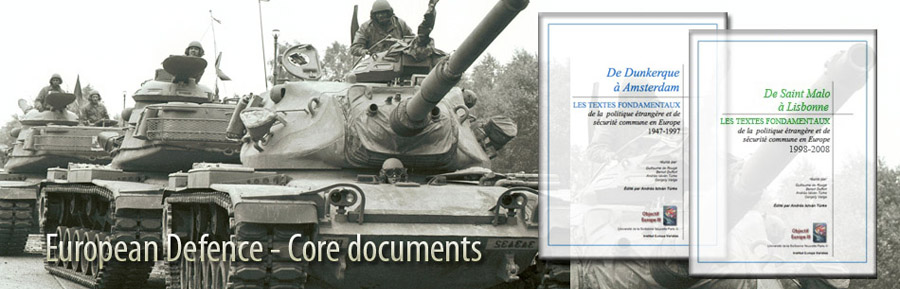

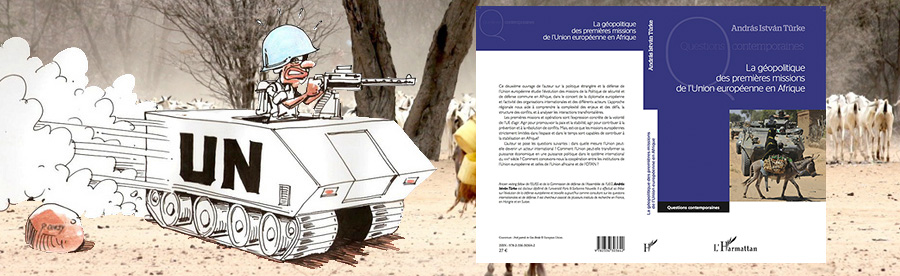

We are looking for sponsors for the English translation of these books, please contact turkeandras(at)gmail(dot)com