
You are here
Európai Unió : hírek magyarul
Science-policy interfaces and sustainable development: institutionally bridging the knowledge–action gap
This chapter describes science-policy interfaces (SPIs) as an opportunity to support sustainable development by bridging the knowledge-action gap and fostering evidence-based policies. The biggest challenges of sustainable development presented and discussed in previous chapters, including climate change, biodiversity loss, environmental injustice, and pandemics, are growing increasingly complex and uncertain. It has long been argued that for public interventions, such as policies, to more effectively address such problems and enhance sustainable development, structured evidence-based advice is needed.
Based on examples and theoretical knowledge from the literature, the chapter demonstrates how SPIs have the potential to fill knowledge gaps and foster concerted action on complex sustainability problems, specifically related to the environmental dimensions of sustainable development. Examples of prominent SPIs at the global scale are the Intergovernmental Panel on Climate Change (IPCC) and the Intergovernmental Science-Policy Platform on Biodiversity and Ecosystem Services (IPBES), which we explore in depth later in the chapter.
The chapter also presents the scholarly discourse on the effectiveness of SPIs in brief, emphasising the importance of being aware of the benefits and limitations of SPIs and different models of formalised knowledge co-production. While many scholars advocate for a co-production model over a linear model, the literature agrees that there is no ‘one-size-fits-all’ solution for facilitating interactions and coordination between knowledge holders, policymakers, and other stakeholders to effectively enhance sustainable development and synergies between interventions. When talking about sustainable development, social-political contexts need to be considered because sustainability issues are inherently interlinked and political, as reiterated in previous chapters. This chapter emphasises that effective science-policy engagement requires a two-way, iterative knowledge exchange. This approach is essential for operationalising a co-production model that incorporates diverse perspectives and knowledge systems—an indispensable factor in addressing the complex, interlinked challenges of sustainable development. Building on the previous chapter’s exploration of the growing significance of science-policy interactions in sustainable development, we want to offer a behind-the-scenes perspective on the dynamics of major intergovernmental organisations shaping the science-policy interface.
Press release - Highlights of this week's international trade committee
Extraordinary meeting of the International Trade Committee and joint meeting with the Internal Market Committee and the Industry Committee. Both on Tuesday 2 June
Committee on International Trade
Source : © European Union, 2026 - EP
Committee on International Trade
Source : © European Union, 2026 - EP
Zambian bureaucratic practices in Chinese-financed digital projects
Drawing on interviews with Zambian officials, bureaucrats, and both Chinese and Zambian professionals in the digital sector, this policy brief examines how Zambian actors have engaged with Chinese-financed digital projects across two administrations: the Patriotic Front (PF) government under Edgar Lungu (2015–2021) and the United Party for National Development (UPND) government under Hakainde Hichilema (2021–present). It argues that the transition from the PF to the UPND widened bureaucratic room for manoeuvre in managing Chinese digital projects, yet these gains remained limited and sometimes fragile, as they were partly offset by personnel reshuffling and relatively weak institutional continuity.
The oil shock and the new political economy of development cooperation
The 2026 US–Israel–Iran war and the closure of the Strait of Hormuz have triggered one of the largest oil supply disruptions in modern history. Brent crude prices rose sharply, producing a major external shock for oil-importing developing economies at a moment when the international development system was already under severe strain. Petrochemical products shipped through the strait are also vital for agriculture, medicine and industry. The largest contraction on record of official development assistance (ODA) had already been recorded in 2025, while geopolitical tensions and rising defence expenditures are reshaping ODA spending priorities and development policy directions.
This brief examines how the oil shock will impact development cooperation. The significance of the oil shock lies not only in the price increase itself but also in its timing, and it arrives amid an ongoing reconfiguration of development cooperation. The analysis is organised around two postulates that underpin the post–Cold War development architecture. The first is the existence of states in the Global South with sufficient authority and developmental aspirations and capacity to pursue broad-based development goals. The second is the existence of donor countries willing and able to support those states’ aspirations.
The oil shock weakens both postulates through different mechanisms. For many oil-importing developing countries, rising fuel, food and transport costs intensify fiscal stress, debt vulnerabilities and pressures on state capacity. Fragile states without strategic importance are especially exposed. At the same time, donor countries face mounting pressures
from fiscal tightening, defence spending, domestic cost-of-living politics and growing scepticism towards multilateralism. These dynamics risk reinforcing one another in the sense that weakening state capacity can intensify instability, while rising instability may further reduce political support for development co-operation in donor countries.
The brief argues that alternative financing sources such as Gulf finance, South–South cooperation and climate finance are unlikely to compensate for the scale of OECD donors’ retrenchment. The likely result is a more fragmented, transactional and geographically selective development cooperation system, in which the countries most in need are increasingly among the least likely to receive sustained support unless they hold geopolitical importance.
Three policy implications follow from the war. First, the multilateral development financing architecture requires urgent bolstering. Instruments such as the World Bank’s International Development Association and the IMF’s Poverty Reduction and Growth Trust face growing pressure precisely as low-income countries (LICs) confront simultaneous food, fuel, debt and financing shocks. Second, the increasing concentration of concessional finance to strategically prioritised states should not be treated as inevitable. Fragile states risk declining concessional finance and multilateral reach despite acute humanitarian need. Third, European donors must decide whether development cooperation remains anchored in poverty reduction or becomes subordinated to defence, migration and geopolitical priorities.
Professor Andy Sumner is a professor of International Development at King’s College London and President of the European Association of Development Research and Training Institutes.
Is there a business case for banks to increase lending to women and women-led firms? Cross-country evidence on financial performance
Financial constraints are one of the most severe obstacles for the operation and development of small and medium-sized enterprises (SMEs), especially in low- and middle-income countries (LMICs). Yet women and women-led enterprises are disproportionally affected, which leads to a gender gap in access to finance. This paper uses panel estimation techniques, namely a correlated random effects model, for 1,655 financial institutions from 109 mostly LMICs for the years 2000 to 2019 to examine empirically whether there are purely economic incentives for financial institutions to scale up their lending activities towards women and women-led enterprises. Going beyond the microfinance sector, this study provides – to the best of my knowledge – the first empirical evidence on this question for banks and bank-like financial institutions that serve higher credit market segments. I find positive and significant effects on the quality of the loan portfolio (lower portfolio at risk), income streams (higher portfolio yield) and the overall financial performance (captured by return on assets or profit margin). Since economic incentives and profitability considerations are crucial in steering the decisions of financial institutions with regard to credit allocations, the banks’ self-interest could lead to management decisions and internal directives to favor female loan applicants, which could contribute to closing the gender gap in access to finance. Furthermore, the findings on the positive effects on banks’ financial performance give policymakers and regulators leeway to push financial institutions through more restrictive policy measures and regulatory requirements to direct more loans to women and women-led firms.
Demonstration plots as assemblages: the political ecology of knowledge intensive agricultural futures in Tanzania
Demonstration plots (demo plots) are crucial for knowledge dissemination and knowledge production to and with smallholder farmers in sub-Saharan Africa, making them important in rural development. Beyond their agricultural extension function considerations, their political and ecological dynamics remain undertheorized. Drawing on qualitative empirical data across Mbeya Region, Tanzania, we analyze the political ecology of different demonstration plots as assemblages deployed by private-sector actors, NGOs/grassroots organizations, and research institutions, to shape agricultural transformation. Our study reveals stark power asymmetries: private sector and research-led demo plots, strategically located and strongly resourced, dominate both physical and discursive landscapes. Their alliance building and branding practices territorialize monocultures, input-dependent farming as aspired futures. Conversely, the more conservation-oriented grassroots demo plots, despite retaining agroforestry socioecological systems, fostering local knowledge and diverse practices, are marginalized by resource constraints and limited institutional support, exposing their territories to constant erasure. Using assemblage theory, we scrutinize demo plots as active sites of socio-technical selection, configuring actors, spaces, and knowledge systems in ways that privilege market integration through intensification, while sidelining alternatives. The analysis challenges prevailing narratives of demo plots as neutral (even apolitical) pedagogical tools, instead arguing to understand them as instruments of power that determine which agricultural futures materialize.
Beyond banking? An institutional logics perspective on the European Investment Bank’s approach to fragile states
The European Investment Bank (EIB), the world’s largest multilateral financial institution, has supported projects in over 160 countries, including fragile and conflict-affected states (FCSs). Following Russia’s full-scale invasion of Ukraine, the EIB adopted its first Strategic Approach to Fragility and Conflict in 2022. While the bank has a history of operating in FCSs, this strategy signals its ambition to strengthen the bank’s focus on state fragility. What is driving this shift and how does it align with the EIB’s traditional emphasis on financial sustainability and risk aversion? This paper examines the drivers of the EIB’s engagement with fragile states through an institutional logics lens, identifying three core logics embedded in the bank’s identity: development, investment and bureaucratic logics. The analysis shows that although development and bureaucratic logics strongly shape the new strategy, the investment logic – anchored in financial prudence – continues to influence lending practices. This finding suggests that the progressive rhetoric on fragility is constrained by institutional caution.
The Putin-Xi Summit and the Asymmetry of the China-Russia Partnership
While both states share dissatisfaction with the Western-led international order and seek a more multipolar system, the summit revealed important differences.
Categories: Diplomacy & Crisis News, Európai Unió : hírek magyarul
Will the EU Develop a Pragmatic Strategy Toward Afghanistan?
Afghanistan’s path to international recognition and fuller participation in the global community depends, in part, on the approach the European Union chooses to take.
Categories: Diplomacy & Crisis News, Európai Unió : hírek magyarul
Press release - Tackling youth unemployment: MEPs conclude fact-finding visit to La Réunion
A delegation from the Employment and Social Affairs Committee was in La Réunion to assess youth employment initiatives and to meet government representatives.
Committee on Employment and Social Affairs
Source : © European Union, 2026 - EP
Committee on Employment and Social Affairs
Source : © European Union, 2026 - EP
La Fnac organise sa première soirée lecture à Paris Bercy : entrée gratuite à condition de lâcher son téléphone
Categories: Európai Unió : hírek magyarul, France
Une parade du PSG au Champ-de-Mars ? Le très huppé VIIe arrondissement retient son souffle : « On est puni ! »
Categories: Európai Unió : hírek magyarul, France
Soupçons de harcèlement sexuel au Raid : l’IGPN, la police des polices, est désormais saisie
Categories: Európai Unió : hírek magyarul, France
« Il y a plus de naturel » : quand demandeurs d’emploi et recruteurs jouent au tennis de table avant un job dating
Categories: Európai Unió : hírek magyarul, France
Camélia Jordana donne des mini-concerts dans un hôtel parisien : « Un petit geste de résistance au monde fou »
Categories: Európai Unió : hírek magyarul, France
Media advisory - Competitiveness Council (Internal market, Industry, Research and Space) of 28 and 29 May 2026
Main agenda items, approximate timing, public sessions and press opportunities.
Categories: Afrique, Európai Unió : hírek magyarul
Council agrees position to simplify and strengthen food and feed safety requirements
Council agrees position to simplify and strengthen food and feed safety requirements.
Categories: Afrique, Európai Unió : hírek magyarul
Press briefing - EU-Western Balkans summit of 5 June 2026
The press briefing will take place on Thursday 28 May 2026 at 14:30.
Categories: Afrique, Európai Unió : hírek magyarul
Bővítés: Albánia teljesítette az „Alapkérdések” témakörre vonatkozó időközi kritériumokat
Az Albániával tartott csatlakozási konferencia nyolcadik ülésére a mai napon került sor Brüsszelben. Az ülésen megerősítést nyert, hogy Albánia összességében teljesítette az 1. témakörre („Alapkérdések”) vonatkozó időközi kritériumokat, és tárgyalási zárókritériumok kerültek meghatározásra.
Categories: Afrique, Európai Unió : hírek magyarul
Az emberi jogok megsértése Oroszországban: az EU 2027 májusáig meghosszabbította a korlátozó intézkedéseket
A Tanács egy évvel, 2027. május 28-ig meghosszabbította az olyan személyekre és szervezetekre irányuló korlátozó intézkedések keretét, akiket, illetve amelyeket felelősség terhel Oroszországban elkövetett súlyos emberi jogi jogsértésekért és visszaélésekért, valamint az ország civil társadalmának és demokratikus ellenzékének elnyomásáért.
Categories: Afrique, Európai Unió : hírek magyarul
Pages


© 2012-2018 Europa Varietas Foundation © 2015-2018 Europa Varietas Association
www.europavarietas.org | info(@)europavarietas(dot)org | Switzerland
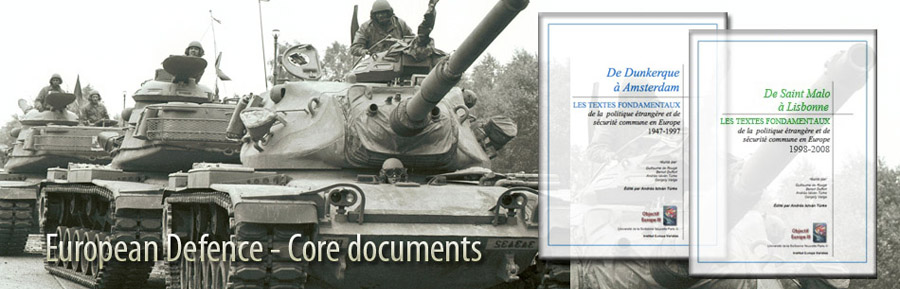
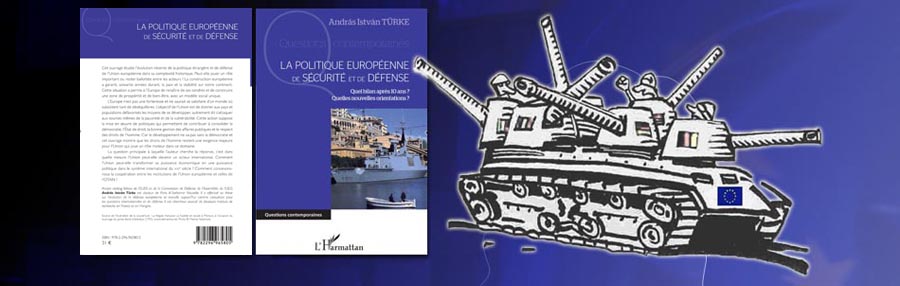
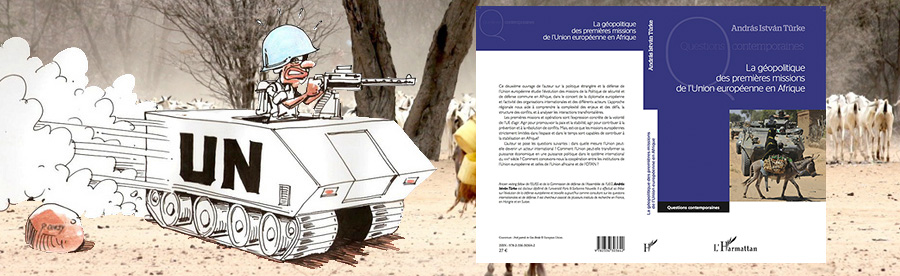
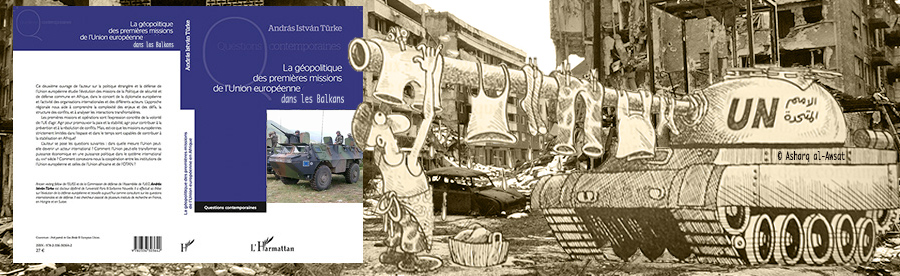
We are looking for sponsors for the English translation of these books, please contact turkeandras(at)gmail(dot)com