
You are here
OSCE


Central Asian youth develop policy recommendations on preventing youth crime at OSCE forum
600335
From 13 to 17 October, the OSCE Secretariat organized the second Central Asian Youth Dialogue Forum on Youth Crime Prevention in Issyk-Kul, Kyrgyzstan. The event brought together around 20 young leaders from Kazakhstan, Kyrgyzstan, Tajikistan, Turkmenistan and Uzbekistan to develop policy recommendations and strengthen youth-led resilience and prevention initiatives across the region.
The Forum served as a regional platform for young people to identify and discuss pressing security challenges related to organized crime and corruption affecting their peers. Through interactive sessions, participants developed concrete policy proposals and innovative ideas to enhance prevention efforts and strengthen youth engagement in policymaking. Their recommendations were presented to representatives of the donor community, international organizations and leading civil society initiatives from across the region.
Among their key recommendations, participants called for the launch of grassroots, youth-led social media campaigns to prevent youth involvement in crime and counter the widespread “quick money” narrative promoted by criminal networks online. They also emphasized the importance of economic empowerment and financial literacy to enable young people to pursue sustainable livelihoods and positive alternatives to crime. Finally, they stressed the need for targeted and individualized approaches to youth crime prevention, addressing underlying root causes such as gender-based and domestic violence, poverty, neglect and parental absence, including in the context of migration.
“We often see how criminal networks exploit young people’s hopes and frustrations. If we don’t give youth real opportunities and positive role models, someone else will,” said Ayaulym, a Forum participant from Kazakhstan.
“Corruption takes away opportunities and public resources that should benefit young people. We need to use technology to make institutions more transparent, accountable and to strengthen a culture of integrity,” highlighted Abunasar, a participant from Tajikistan.
The Forum was held as part of the OSCE-wide multi-year extrabudgetary project: “Enhancing youth crime and drug use prevention through education on legality and awareness campaigns addressing threats of organized crime and corruption”, and was funded by Germany. Other donors supporting this project are Andorra, Finland, Italy, Norway and Poland.
Categories: Central Europe
Uzbek digital forensic experts learn from Moldova’s experience in building accredited IT laboratories
600320
From 21 to 24 October, the OSCE Project Co-ordinator in Uzbekistan, with the support of the OSCE Transnational Threats Department, organized a study visit for five digital forensic specialists from Uzbekistan to Moldova. The purpose of the visit was to discuss experiences and lessons learned from setting up digital forensic laboratories and obtaining an international accreditation.
“As we are currently finalizing the construction of our new IT laboratory and soon will start the process for obtaining international accreditation, learning from the experiences of Moldovan colleagues is priceless. Building capacities in this area is a long-term process, but, thanks to the lessons learned from our international partners, we can do so in a much more effective and efficient way,” said Khagani Gadjiev, Acting Head of the Research Institute for Digital Forensics under the Law Enforcement Academy of Uzbekistan.
The study visit included two IT laboratories in the General Inspectorate of Police of Moldova — one in the Forensic and Judicial Expertise Centre and one in the Centre for Combating Cybercrime — and the IT laboratory in the National Anticorruption Centre of Moldova. The discussions revolved around the technical setup, infrastructure and equipment used in the IT laboratories, standard operating procedures and guidelines for various stages of the digital forensic process, practical case studies, and requirements for international accreditation.
“International collaboration is important for the progress in any scientific field. But in case of digital forensics, it is absolutely essential as digital technologies are constantly evolving. We are thus always open to share our experiences with the colleagues from abroad and learn from each other,“ said Ion Gaina, Head of the IT Forensic Department at the Forensic and Judicial Expertise Centre of the General Inspectorate of Police of Moldova.
The study visit was a direct follow-up to the national assessment of digital forensic capacities in Uzbekistan conducted by the OSCE under the second phase of the OSCE’s regional capacity-building project on combating cybercrime in Central Asia. The findings and recommendations from the assessment were summarized in a roadmap for strengthening digital forensic capacities which was presented to the Uzbekistan’s national authorities in July 2025.
Categories: Central Europe
Romania’s repeat presidential election 2025: ODIHR limited election observation mission final report
600298
Public Affairs Unit, OSCE Office for Democratic Institutions and Human Rights
Katya Andrusz
Romania’s May repeat presidential election was efficiently managed, and recent efforts by the authorities to improve electoral integrity were notable. However, the repeat presidential election was marked by insufficient oversight of key aspects of the campaign and concerns over the widespread use of inauthentic behaviour by candidates online. The fundamental freedoms of association and assembly were respected, and voters had a genuine choice of political alternatives. At the same time, the use of eligibility requirements based on court rulings rather than clear legal provisions undermined the inclusivity of candidate registration. Oversight of the online space remained fragmented, and the lack of transparency in the handling of reported violations discouraged public engagement and resulted in self-censorship.
These are some of the main conclusions from the final report, published today by the OSCE Office for Democratic Institutions and Human Rights (ODIHR). The report offers recommendations to bring elections in Romania closer in line with OSCE commitments and international standards for democratic elections.
Key recommendations include:
- Making greater efforts to promote women’s political participation
- Increasing legal clarity by considering adoption of a unified electoral code for all election types
- Ensuring legal certainty by formalizing amendments introduced through Government Emergency Ordinances or Constitutional Court rulings through the regular parliamentary process with public consultation
- Enhancing transparency and confidence by opening election administration sessions to observers and media
- Protecting the right to stand for election by ensuring candidate eligibility is assessed based on clear, objective criteria established by law rather than Constitutional Court rulings
- Reviewing regulations to ensure social networking platforms implement effective measures against coordinated inauthentic behaviour and disinformation while safeguarding space for genuine political debate online
- Ensuring full transparency of political parties’ media expenditures to enable the public to understand the final beneficiaries
- Reviewing the electoral dispute-resolution framework to allow adequate time for the preparation and adjudication of complaints in order to guarantee effective remedy and due process.
The ODIHR Limited Election Observation Mission to Romania, headed by Eoghan Murphy, started work on 23 March and remained in the country until 25 May.
ODIHR assessed Romania’s efforts to implement previous recommendations. Many previous recommendations remain unaddressed, including those on consolidating the electoral legislation, ensuring transparency and equitable political representation in the election administration, and establishing clear procedures for the verification of support signatures. A full list of recommendations can be found on pages 28-31 of today’s report.
All 57 OSCE participating States have formally committed to follow up promptly on ODIHR’s election assessments and recommendations. The ODIHR Electoral Recommendations Database tracks the extent to which recommendations are implemented across the region.
Categories: Central Europe
Partnerships for climate resilience and security in focus at OSCE Asian Partners for Co-operation Group meeting
600286
Building resilience through strengthened partnerships to address the security implications of climate change was the focus of the OSCE Asian Partners for Co-operation Group meeting held on 24 October 2025 in Vienna.
Participants from OSCE participating States and Asian Partners for Co-operation explored how the challenges caused by changing climate are reshaping security priorities across regions, and how greater co-operation, data sharing and joint policy action can help mitigate risks and enhance collective resilience.
In a keynote address, Mr. Matthew Hudson, acting Assistant Secretary of the Climate Diplomacy Branch, at Department of Foreign Affairs and Trade of Australia, said that “Our economy, society, national security and conditions for prosperity are so deeply enmeshed in the world, we must understand the range of complex and interrelated climate impacts internationally – as an island nation we rely on the capacity and stability of those around us and the quality of those relationships”.
Speakers further highlighted that the growing frequency and severity of climate-related events acted as a risk multiplier, amplifying pressures on economies, ecosystems and societies. They emphasised that climate change not only affects livelihoods and access to natural resources but can also aggravate tensions and create instability, especially in fragile regions. In this context, effective partnerships, both within and beyond the OSCE area, were seen as vital to developing shared understanding and coordinated responses.
Participants exchanged views on how regional and cross-regional collaboration, including between the OSCE and its Asian Partners, can help advance early warning systems, enhance security assessments, and promote stability. Practical experiences were shared on integrating climate risk reduction into national policies and on fostering inclusive approaches that bring together groups differently impacted by climate change and with distinct knowledge and capacities.
“Tackling climate security is a shared responsibility”, said Deborah Maria Borg, Chairperson of the OSCE Asian Partners for Co-operation Group and Chargé d’Affaires a.i., Delegation of Malta to the OSCE. “As we look into mitigating risks, we need strong partnerships and this is where the OSCE and Asian Partners can make a unique contribution”.
Participants reaffirmed the OSCE’s role as a platform for connecting regions, fostering dialogue and trust and advancing comprehensive approaches to common challenges. They underscored that addressing climate-related security risks collectively is key to preserving resources, enhancing economic resilience and strengthening societal cohesion across the OSCE region and beyond.
Categories: Central Europe
Special Representative of the OSCE Chairperson-in-Office urges Latvia to uphold commitments amid Istanbul Convention exit plans
Henriikka Ahtiainen
Wilhelmina Hindström
Saara-Sofia Sirén, Special Representative of the OSCE Chairperson-in-Office on Gender, expresses deep concern over the Latvian Parliament’s decision to advance an initiative to withdraw from the Istanbul Convention.
The Latvian Parliament has taken a step forward with an initiative aimed at withdrawing the country from the Council of Europe Convention on preventing and combating violence against women and domestic violence, commonly known as the Istanbul Convention. Alarmingly, the proposal received sufficient support to pass the first ballot stage. If Parliament approves the withdrawal in a second vote, Latvia would become the first EU member state to leave the Convention.
“A decision like this represents a serious setback for women’s rights and for efforts to combat violence,” Sirén says.
The Istanbul Convention is the first legally binding instrument in Europe designed to protect women from violence. It obliges states to prevent violence, protect victims, and hold perpetrators accountable.
“The safety of women and girls, their right to protection and to a life free from violence, must not be used as tools in political games. I urge Latvia to uphold its shared international commitments,” Sirén concludes.
Categories: Central Europe
Council of Europe Secretary General, Alain Berset, to address OSCE Permanent Council in Vienna on Thursday
VIENNA, 28 October 2025 — The Council of Europe Secretary General, Alain Berset, will address the OSCE Permanent Council at the Vienna Hofburg on Thursday 30 October.
In his address, Secretary General Berset will focus on Europe’s security challenges, calling for a renewed emphasis on democratic security. In response to rising democratic backsliding and increasing rearmament, Berset will highlight the Council of Europe’s New Democratic Pact for Europe as a collective effort to strengthen Europe’s security architecture and make democracies in Europe more resilient, inclusive, and responsive to contemporary challenges.
Journalists are invited to cover Secretary General Berset’s address at 10:45 am (CET) on Thursday, 30 October (spaces limited).
Following the address to the Permanent Council, a short stand-up press briefing by Secretary General Berset is foreseen tentatively for 11:45 am (CET).
To attend, please register by 12:00 (noon, CET) on Wednesday, 29 October, by sending an email to press@osce.org with your name, outlet and position. Please note that arrival time for the address to the Permanent Council will be at 9:30am (CET).
If you are interested in an individual interview with Council of Europe Secretary General Alain Berset, please contact tatiana.baeva-frachon@coe.int
The OSCE Permanent Council is the decision-making body gathering representatives of all 57 participating States of the Organization and 11 Partners for Co-operation. It convenes weekly in Vienna to discuss developments in the OSCE area.
Categories: Central Europe
ODIHR opens special election assessment mission in Bosnia and Herzegovina
BANJA LUKA, 28 October 2025 – The OSCE Office for Democratic Institutions and Human Rights (ODIHR) today opened an observation mission for the 23 November early election of the president of Republika Srpska, Bosnia and Herzegovina, following an invitation from the national authorities.
The mission is led by Mátyás Eörsi and consists of 11 international core team experts from 9 OSCE participating States based in Banja Luka from 28 October and four regional analysts from four different participating States deployed in teams of two across Republika Srpska from 31 October.
The mission will assess the conduct of the election for its compliance with OSCE commitments and other international obligations and standards, as well as with national legislation.
Observers will closely assess a number of specific areas, including the conduct of the campaign also on social networks, the work of the election administration at all levels, election legislation and its implementation, campaign finance, media environment, and the resolution of election disputes.
Meetings with representatives of state and entity-level authorities and political parties, the judiciary, civil society, the media and the international community form an integral part of the observation.
The observers will not carry out any comprehensive observation of the voting, counting and tabulation on election day, but mission members will visit a limited number of polling stations.
The day after the election, a statement of preliminary findings and conclusions will be presented at a press conference. A final report containing an assessment of the entire election process and recommendations for future elections will be published some months after the election.
The ODIHR special election assessment mission and the OSCE Mission to Bosnia and Herzegovina operate independently under their separate mandates. For further information on ODIHR’s election observation activities in the country, please visit: https://www.osce.org/odihr/elections/bih
For further information, please contact:
Katya Andrusz, ODIHR Spokesperson: Katya.Andrusz@odihr.pl or +48 609 522 266
Veronica Laputska, Media Analyst with the Special Election Assessment Mission: veronica.laputska@odihr-ba.org
Categories: Central Europe
OSCE trains law enforcement officers on effective intervention with domestic violence perpetrators
600238
On 21-22 October, the OSCE Project Co-ordinator in Uzbekistan, together with the National Center for Human Rights and Ministry of Internal Affairs of the Republic of Uzbekistan, held a two-day training course in Tashkent titled “Combating Violence Against Women through Intervention with Domestic Violence Perpetrators”.
The goal of the event was to enhance participants’ skills in identifying, analyzing and addressing the behavior of perpetrators of domestic violence. Another aim was to strengthen inter-agency co-operation to ensure more effective protection of women’s rights.
During interactive sessions, representatives from the Crime Prevention Service of the Public Security Department of the Ministry of Internal Affairs discussed international standards and good practices in addressing gender-based violence, examined modern approaches to changing perpetrators’ behaviour and practiced motivational interviewing techniques.
Participants developed practical recommendations aimed at improving preventive measures, increasing the effectiveness of rehabilitation work with perpetrators, and strengthening the overall system of protection and support for victims of violence.
Categories: Central Europe
2025 Economic and Environmental Dimension Implementation Meeting to take place in Vienna
VIENNA, 27 October 2025 – The Economic and Environmental Dimension Implementation Meeting (EEDIM), held annually to review the implementation of the commitments undertaken by OSCE participating States through various Ministerial Council decisions, will take pace in Vienna on 28 and 29 October.
EEDIM provides a framework to enhance dialogue and co-operation on key thematic areas within the second dimension of security on economic and environmental issues. The focus of this year’s EEDIM is on disaster risk reduction in the OSCE area.
The opening session of the meeting will take place from 11:00 to 11:45 a.m. Vienna time and will be livestreamed on https://www.osce.org/live.
For more information, visit the 2025 Economic and Environmental Dimension Implementation Meeting (EEDIM) event page.
Categories: Central Europe
OSCE Mission and Swedish Civil Contingencies Agency support the Armed Forces of Montenegro in conducting training courses on firefighting and first aid
600220
Marina Živaljević
Two parallel training courses on firefighting and first aid were organized for members of the Armed Forces of Montenegro, focusing on fire suppression techniques, the use of specialized vehicles and modern equipment, and the provision of first aid. The courses were supported by the OSCE Mission to Montenegro and the Swedish Civil Contingencies Agency (MSB).
From 13 to 24 October, instructors from the Armed Forces of Montenegro, previously trained and certified by MSB experts, conducted an in-house firefighting training course for 12 members of the Armed Forces, at the “Knjaz Danilo” military airport firefighting training area. Ahead of the training course, the Mission and MSB provided the Armed Forces with firefighting equipment in order to enhance the capacities in firefighting and fire prevention.
In parallel, from 20 to 24 October, a first aid training course was organized for 26 participants, conducted by the Armed Forces instructors who had been trained and certified by MSB earlier this year.
This comprehensive training programme represents an important step towards strengthening the preparedness of the Armed Forces in responding to emergency situations, as well as increasing the safety and protection of all citizens. The importance of such training is underscored by the severe wildfires experienced during the summer and the growing risk of similar incidents in the years ahead.
These activities were part of the Mission’s extra budgetary project “Mitigation of Safety and Security Risks related to SALW/SCA in Montenegro”, funded by Austria, France, Germany, Hungary, Montenegro, Norway, Slovakia and Switzerland with substantial in-kind support from Sweden.
MSB strengthens Sweden’s preparedness for major accidents, crises, and war-related emergencies, while also supporting international partners such as the OSCE through co-operation and civil protection and peace-support efforts.
Categories: Central Europe
OSCE supports energy security and resilience in South-Eastern Europe and the Mediterranean Region through anticipatory tools and localized climate projections
600205
Energy experts and decision-makers from South-Eastern Europe and the Mediterranean met in Vienna on 15-16 October for an OSCE Regional Workshop on “Building Energy Systems Resilience: Science-based Decisions to Face Future Risks and Extreme Weather”.
The event equipped participants with detailed long-term climate projection data and practical anticipatory and risk management tools to help make energy systems more resilient to future risks. Senior representatives from ministries of energy and environment, transmission system operators, energy regulators, hydrometeorological services, and academia took part, reflecting the cross-sectoral nature of the project.
“Through this project the OSCE provides critical, high-detail datasets that are essential for long-term energy system planning,” said Kliment Naumoski, Advisor and Grid Planning Expert at MEPSO, the Electricity Transmission System Operator of the Republic of North Macedonia. “The new tools, particularly the visualized climate indices, give us clear and practical insights for screening future risks and opportunities for our infrastructure. This workshop was especially valuable as it helped us learn how to read, interpret, and apply these climate datasets directly in our day-to-day energy planning decisions.”
Over two days, participants reviewed the findings from the OSCE’s downscaled climate-modelling data at a 12 km spatial resolution, covering key energy-relevant indices – such as average temperature rises, consecutive warm and dry days, cooling and heating demand, and precipitation intensity – and explored their implications for energy infrastructure resilience, generation, transmission and demand planning.
Delegates also explored the forthcoming OSCE Energy Security Platform – an online decision support tool that will help energy and climate stakeholders in the beneficiary countries anticipate and prevent multi-dimensional risks while identifying opportunities to enhance energy security and advance the energy transition.
Recognising that energy systems face growing pressures from heatwaves, droughts, flooding, wildfires and shifting resource availability, participants emphasized the need for climate-informed strategies to diversify supply, improve operational robustness and foster cross-border cooperation, and highlighted the key role of the OSCE in making these tools available.
The event was organized by the OSCE Office of the Co-ordinator of OSCE Economic and Environmental Activities in partnership with Argonne National Laboratory, under the OSCE extrabudgetary project Mitigating Climate Change Threats to the Energy Sector in the OSCE Region | OSCE, funded by Austria, Germany, Italy, Poland, and the United States.
Categories: Central Europe
OSCE Head Visits Canton 10 and Una-Sana Canton, Discusses Governance, Anti-Corruption, and Reconciliation
600172
Željka Šulc
Bihać, 23 October 2025 - The Head of the OSCE Mission to Bosnia and Herzegovina, Ambassador Rick Holtzapple, conducted a two-day visit to Canton 10 and Una-Sana Canton, meeting with various political leaders, local government officials, civil society actors, and community representatives. The visit reinforced the Mission’s commitment to supporting good governance, democratic processes, the rule of law, human rights, and trust-building efforts across Bosnia and Herzegovina.
Ambassador Holtzapple began his visit in Livno with a meeting with Canton 10 Prime Minister Ivan Vukadin, where they discussed advancing firearms legislation aligned with international standards, enhancing transparency in concession laws, and advancing the operationalization of the Anti-Corruption Office. The two leaders also touched upon preparations for the 2026 elections, including measures to strengthen electoral integrity, and political co-operation within the canton.
In Glamoč, the Ambassador met with Mayor Nebojša Radivojiša to acknowledge the municipality’s ongoing co-operation with the Mission including the joint CoE-EU-OSCE-UN “Možemo Bolje” initiative. Discussions emphasized inclusive local governance, strong inter-communal relations, and the importance of adequate staffing at the Social Welfare Centre to ensure effective service delivery.
During a meeting in Glamoč with local educational, cultural, social and civil society representatives, Ambassador Holtzapple commended their active role in the aforementioned “Možemo Bolje” trust-building initiative and reaffirmed the Mission’s support for inclusive local development and civic participation in this mixed community.
In Bihać, Ambassador Holtzapple congratulated Prime Minister Mustafa Ružnić on his recent appointment and discussed key government priorities, including anti-corruption efforts and the status of the draft Law on Asset Declaration. He met with Mayor Elvedin Sedić to discuss local governance challenges such as environmental protection of the Una River, sustainable development, and social service delivery as well as the lack of basic living conditions of returnees in areas around Bihać.
The Ambassador also met with Adela Tabaković, Head of the USC Anti-Corruption Office, to reaffirm strong support for the Office’s independence and professionalism, focusing on implementation of the anti-corruption measures and legislation at the cantonal level.
Further, Ambassador Holtzapple met with Vahidin Omanović and Mevludin Rahmanović of the Centre for Peacebuilding (CIM) in Sanski Most to discuss the critical, on-going human rights, youth empowerment, and dialogue initiatives. The conversation included exploring ways to strengthen transitional justice efforts in BiH.
At the meeting with the cross-entity association Mountaineers Without Prejudice at Kanjon Mountain House, the Ambassador praised their work in building and strengthening bridges across entity lines and reiterated the Mission’s commitment to continued co-operation.
During the visit, Ambassador Holtzapple met with the teams of Radio Livno and RTV Sana, reaffirming the Mission’s strong commitment to media freedom and support for professional journalism.
The productive dialogues paved the way for continued co-operation on environmental protection, social service delivery, and trust-building initiatives. The visit underscored the Mission’s commitment to supporting transparent, accountable institutions and fostering reconciliation and stability across Bosnia and Herzegovina.
Categories: Central Europe
Albania parliamentary elections 2025: ODIHR election observation mission final report
600166
Public Affairs Unit, OSCE Office for Democratic Institutions and Human Rights
Katya Andrusz
Albania’s parliamentary elections on 11 May were competitive and professionally managed, but they took place in a highly polarized environment and contestants did not enjoy a level playing field. While candidates were generally able to campaign freely, there were reports of intimidation, misuse of public resources and pressure on public employees, which undermined equal opportunities. Election day was calm overall, but procedural shortcomings, instances of intimidation and vote buying, and problems with ensuring ballot secrecy were noted.
These are some of the main conclusions from the final report, published today by the OSCE Office for Democratic Institutions and Human Rights (ODIHR). The report offers recommendations to bring elections in Albania closer in line with OSCE commitments and international standards for democratic elections.
Key recommendations include:
- Undertaking comprehensive reform of the legal framework through an inclusive consultation process
- Ensuring stability and impartiality of the election administration by depoliticizing nomination procedures for lower-level election commissions
- Prohibiting the use of public resources for campaigning, and imposing sanctions for the misuse of office or state resources to ensure a level playing field
- Clearly defining pre-electoral campaign activities and expenses to ensure proper reporting, oversight, and enforcement of potential sanctions
- Increasing voter awareness of procedures for electronic voting to ensure all voters can cast their ballots independently
- Requiring political party and government footage to be labelled as political advertising and banning it from news and editorial programs, with timely sanction of any violations.
The ODIHR Election Observation Mission to Albania, headed by Ambassador Lamberto Zannier, started work on 2 April and remained in the country until 22 May.
ODIHR also assessed Albania’s efforts to implement previous recommendations. While some were addressed, many long-standing recommendations remain unimplemented, including those related to the composition of election commissions, interim reporting on campaign finance, and strengthening independent media coverage. A full list of recommendations can be found on page 32-34 of today’s report.
All 57 OSCE participating States have formally committed to follow up promptly on ODIHR’s election assessments and recommendations. The ODIHR Electoral Recommendations Database tracks the extent to which recommendations are implemented across the region.
Categories: Central Europe
Handwriting Under the Microscope: OSCE Training Enhances Ukrainian Forensic Document Analysis
600160
The signature looks real, but is it? Forensic document experts know that even the slightest hesitation in a pen stroke, or the smallest ink variation, can reveal a false identity. The OSCE Transnational Threats Department, in co-operation with the State Forensic Science Bureau of Latvia (SFSB), delivered a specialized training on forensic handwriting examination for forensic document experts from the Main Forensic Center of the State Border Guard Service of Ukraine (SBGS) from 21 to 23 October in Riga.
The training, hosted at the SFSB laboratory, focused on advanced handwriting and signature examination techniques in accordance with the Best Practice Manual from the European Network of Forensic Science Institutes. The participants learned how to recognize subtle signs of forgery, including disguised handwriting, simulated signatures, and unnatural pen movements often seen in altered or counterfeit documents such as passports and border permits.
They also learned how to use scientific handwriting analysis to confirm whether a signature is genuine or forged, an important skill for frontline border security efforts. At border crossing points, individuals whose identity is in doubt may be asked to sign their name so officers can use these analysis techniques to compare the live signature with the one in the passport. This basic practice can help detect potential imposters before documents are sent for deeper forensic examination.
The Latvian experts taught participants about how subtle features such as pen pressure, letter connections, writing speed, and flow can reveal whether a signature is genuine, imitated, or disguised. Using specialized tools like microscopes, infrared lighting, and digital analysis software, they practiced spotting signs of tampering that are often invisible to the naked eye.
Participants also studied how external factors, such as stress, illness, writing surfaces, or the type of pen, can influence handwriting. They were trained to distinguish between natural variations in a person’s writing and suspicious signs of fraud, such as traced or photocopied signatures.
The training course was an important part of preparing participants for completing their national certification exams in forensic examination of handwriting This certification ensures border security officers have the requisite skills and knowledge to effectively and independently carry out forensic handwriting examinations.
The training course was part of an ongoing extrabudgetary project supporting the OSCE participating States and Partners for Co-operation in reducing illegal border crossings by using a fake or stolen identity. This project is funded by the United States.
Categories: Central Europe
OSCE Mission Statement on the Online Attack Against Female Journalist Rabija Arifović
599847
Željka Šulc
The OSCE Mission to Bosnia and Herzegovina (Mission) condemns the use of misogynistic and religiously prejudiced rhetoric directed at STAV journalist Rabija Arifović and other female journalists and members of journalists’ associations. Media professionals must be able to work in a safe and respectful environment, with their freedoms and personal security fully protected.
The Mission commends the response from law enforcement and judicial institutions and urges bodies responsible for gender equality and human rights to work on ensuring security, professional protection and safe online space for all female journalists who often encounter gender-based harassment, online abuse, and threats to their personal safety in carrying out their professional duties.
The Mission calls on all actors to refrain from language and rhetoric that undermines the safety, integrity, or professional standing of journalists.
The Mission will continue to support efforts aimed at safeguarding journalists and promoting a safe and respectful environment for media professionals.
Categories: Central Europe
OSCE facilitates sessions to strengthen Tajikistan-Kyrgyzstan border water co-operation
600136
Munira Shoinbekova, OSCE Programme Office in Dushanbe
On 17 October 2025, the OSCE Programme Office in Dushanbe, in co-operation with the Ministry of Energy and Water Resources and the Agency for Land Reclamation and Irrigation, organized introductory sessions on the recently established Tajikistan-Kyrgyzstan Border Agreement.
The event, attended by 30 regional officials (one woman) from both institutions in the Sughd Region, highlighted the agreement’s importance as a key milestone in bilateral co-operation.
The sessions aimed to enhance institutional capacity by equipping participants with knowledge and practical skills needed for the effective implementation of the agreement at local level. Through training and open dialogue, officials discussed regional co-operation on transboundary rivers, the legal framework for bilateral water co-operation, national water legislation, and integrated water resources management.
By empowering regional staff, the initiative promotes closer collaboration and co-ordination between border regions of the two countries, contributing to sustainable resource management and stability in border communities.
This activity aligns with the OSCE’s mission to support dialogue, foster co-operation, and promote lasting peace and sustainable development in the region.
Categories: Central Europe
Territorial election commissions receive training on good practices for conducting transparent elections
600112
The OSCE Project Co-ordinator in Uzbekistan (PCUz), in collaboration with the Central Election Commission of the Republic of Uzbekistan and the OSCE Office for Democratic Institutions and Human Rights (ODIHR), convened a two-day workshop in Tashkent on 20 and 21 October for members of territorial election commissions and staff of the Central Election Commission.
During the event, titled “International Electoral Standards and the Practice of Conducting Elections in Uzbekistan”, participants familiarized themselves with key international electoral standards and engaged in discussions on their practical application in the national context.
The event was opened by Zayniddin Nizamkhodjaev, Chairperson of the Central Election Commission, and Ambassador Antti Karttunen, OSCE Project Co-ordinator in Uzbekistan.
“Election management bodies are fundamental to ensuring transparency and fostering public confidence in the electoral process,” Ambassador Karttunen said.
“The professionalism, impartiality and openness of members are key factors in building trust among citizens. Ongoing investment in training, technological innovation and effective communication remains essential to strengthening trust in democratic institutions
The workshop focused on the challenges faced by election commissions in the administration of elections, with participants engaging in constructive dialogue to identify practical and context-specific solutions.
In June, the PCUz commissioned a comprehensive analysis of ODIHR’s recommendations on Uzbekistan’s 2024 parliamentary elections. This analysis is intended to facilitate implementation of these recommendations.
The PCUz will continue to working closely with the Central Election Commission in supporting the ongoing development of transparent and credible election processes in Uzbekistan.
Categories: Central Europe
OSCE Secretary General highlights OSCE’s contribution to regional security during official visit to London
LONDON, 22 October 2025 – OSCE Secretary General Feridun H. Sinirlioğlu completed his first official visit to the United Kingdom today. He participated in the 2025 Berlin Process Leaders’ Summit on the Western Balkans in London, which brought together leaders from across Europe and South-Eastern Europe.
“Since the 1990s, the OSCE has been deeply engaged in the Western Balkans,” said Sinirlioğlu. “In a region where the scars of conflict endure, lasting peace depends not only on political agreements but also on inclusion and resilient institutions. These principles lie at the heart of the OSCE’s continued commitment to the Western Balkans.”
During the visit, the Secretary General met with Foreign Secretary Yvette Cooper and other senior officials, including National Security Advisor Jonathan Powell.
Categories: Central Europe
OSCE launches training series on combating money laundering through virtual assets in Turkmenistan
600091
A two-day OSCE workshop in Ashgabat on 21 and 22 October brought together 27 regulators, supervisory authorities, prosecutors, investigators, representatives of commercial banks, and other professionals to address money-laundering risks linked to virtual assets and blockchain-based finance.
This workshop marked the launch of a two-part training series designed to help national institutions align their regulatory, supervisory, and investigative practices with international standards, including the Financial Action Task Force (FATF) Recommendations 15 and 16. A follow-up session in November 2025 will beuild on this foundation, focusing on legislative, regulatory, and investigative aspects.
Participants explored key topics such as four pillars of compliance in blockchain-based finance, licensing and registration of Virtual Asset Service Providers (VASPs), and institutional arrangements for effective supervision. Through practical exercises, they explored how to draft relevant legislation, manage virtual asset investigation cases, and enhance co-operation between regulators, law enforcement, and the banking sector.
The training proved timely, as national authorities are currently drafting legislative amendments on virtual assets. Participants highlighted the importance of continued OSCE support in providing expert guidance and capacity-building assistance. The event concluded with discussions on emerging typologies of crypto-related crime typologies and blockchain applications beyond cryptocurrencies.
The event was organized in co-operation with the OSCE Centre in Ashgabat, as part of the OSCE extra-budgetary project “Innovative Policy Solutions to Mitigate Money-Laundering Risks of Virtual Assets”, implemented by the Office of the Co-ordinator of OSCE Economic and Environmental Activities (OCEEA). The project receives financial support from Germany, Italy, Poland, Romania, the United Kingdom, and the United States.
Categories: Central Europe
ODIHR opens election observation mission in Kyrgyzstan
BISHKEK, 23 October 2025 – The OSCE Office for Democratic Institutions and Human Rights (ODIHR) today opened an election observation mission (EOM) for the 30 November early parliamentary elections in Kyrgyzstan, following an invitation from the national authorities and in accordance with its mandate.
The mission is led by Tamás Meszerics and consists of a core team of 12 experts based in Bishkek and 30 long-term observers, who will be deployed throughout the country from 29 October. In addition, ODIHR plans to request 300 short-term observers, to arrive several days before election day.
The mission will assess the conduct of the elections for their compliance with OSCE commitments and other international obligations and standards for democratic elections, as well as with national legislation.
Observers will closely monitor all aspects of the election process, including the conduct of the campaign, including on social networks, the work of the election administration at all levels, election legislation and its implementation, respect for fundamental freedoms, media coverage, election dispute resolution, and the work of citizen observer groups. They will also assess the implementation of previous ODIHR election recommendations.
Meetings with representatives of state authorities, political parties, civil society, the media and the international community form an integral part of the observation.
On election day, the ODIHR mission will join efforts with a delegation from the OSCE Parliamentary Assembly (OSCE PA) to observe the opening of polling stations, voting, the counting of ballots and the tabulation of results.
ODIHR will publish an interim report some two weeks prior to the elections to update the public and media on the observation mission’s activity, and the day after the elections, a statement of preliminary findings will be presented at a press conference. A final report containing an assessment of the entire election process and recommendations will be published some months after the elections.
The ODIHR Election Observation Mission and the OSCE Programme Office in Bishkek operate separately and independently under their own mandates. For further information on ODIHR’s election observation activities in Kyrgyzstan, please visit: https://www.osce.org/odihr/elections/kyrgyzstan.
Media contacts:
Ružica Jovanović, Media Analyst with the Election Observation Mission: ruzica.jovanovic@odihr.kg or +996755001756.
Katya Andrusz, ODIHR spokesperson: Katya.Andrusz@odihr.pl or +48 609 522 266
Categories: Central Europe
Pages


© 2012-2018 Europa Varietas Foundation © 2015-2018 Europa Varietas Association
www.europavarietas.org | info(@)europavarietas(dot)org | Switzerland
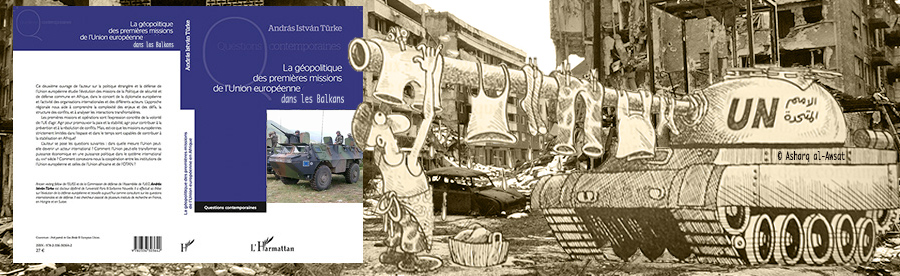
We are looking for sponsors for the English translation of these books, please contact turkeandras(at)gmail(dot)com